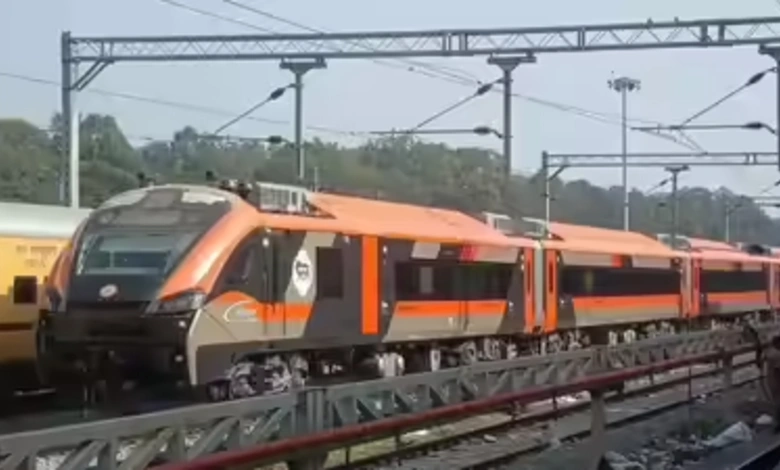
Indian Railways is significantly expanding its Vande Bharat network, driven by clear financial incentives rather than speed or amenities alone. Premium air-conditioned passenger categories stand out as among the few segments of the passenger business that generate profits.
In FY25, most passenger classes recorded losses. Ordinary class posted a loss of Rs 20,705.94 crore, while First Class reported a loss of Rs 48.77 crore. In contrast, AC 3-tier delivered a profit of Rs 3,645.44 crore, higher than the Rs 2,501.07 crore earned in FY24 though below the Rs 3,300.08 crore of FY23. AC Chair Car also turned profitable, generating Rs 376.77 crore in FY25 after losses of Rs 203.96 crore in FY24 and Rs 297.62 crore in FY23.
Chair Car services form a core part of premium trains such as Vande Bharat and Shatabdi. Vande Bharat fares are set higher than Shatabdi rates, creating stronger economics for these services. While no separate profit figure is available for Vande Bharat alone, the success of AC Chair Car combined with rising demand supports the expansion strategy.
Passenger numbers confirm strong interest. The Vande Bharat network carried about 3.98 crore passengers in FY26, a 34 per cent rise from 2.97 crore in FY25. Since the first service began in 2019, the trains have transported more than 9.1 crore passengers across one lakh completed trips by March 2026. The New Delhi-Varanasi corridor remains the busiest, having carried over 73 lakh passengers since its introduction.
ALSO READ : Mumbai-Ahmedabad Vande Bharat Express to Permanently Operate with 20 Coaches
The strategy has extended to overnight travel with the launch of Vande Bharat Sleeper services in January 2026. In the first three months, these trains carried 1.21 lakh passengers over 119 trips and recorded occupancy above 100 per cent. This performance aligns with the consistent profitability of the AC 3-tier category.
Currently, 162 Vande Bharat services operate across the country. As ridership grows and sleeper versions attract strong demand, premium trains are emerging as a key element in improving the overall financial position of passenger operations while meeting the needs of travellers seeking greater comfort and speed.
-

-

-

-