
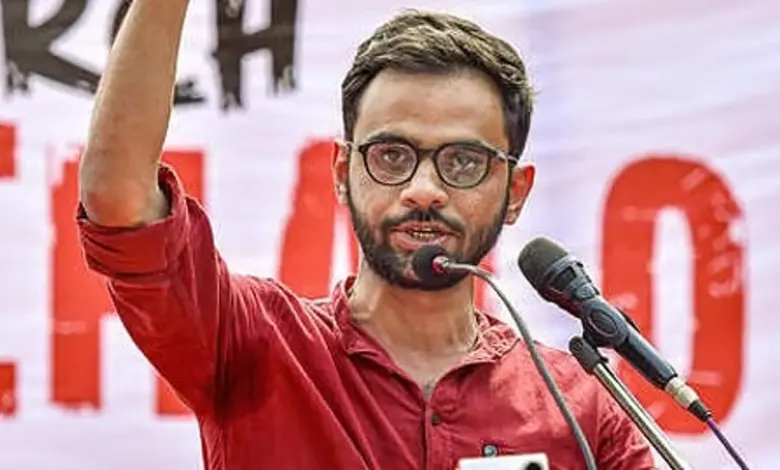
In a limited relief order issued on Friday, the Delhi High Court allowed activist Umar Khalid, a former student leader at Jawaharlal Nehru University, three days of interim bail from June 1 to June 3. The decision was made primarily to enable him to assist his mother ahead of her scheduled medical procedure in the ongoing larger conspiracy case linked to the 2020 northeast Delhi riots.
Khalid, who has remained in judicial custody since September 2020, had approached the high court after a trial court turned down his request for temporary release on May 19. He initially sought a 15-day interim bail period from May 22 to June 5, citing two family reasons: attending the Chehlum ceremony of his late maternal uncle and providing care to his 62-year-old mother, Sabiha Khanam, who is set to undergo lump excision surgery on June 2.
In his petition before the high court, Khalid challenged the trial court’s assessment that his uncle did not qualify as an immediate family member and that other relatives could look after his mother. He emphasised his close relationship with his deceased uncle and his desire to spend time with his 87-year-old grandmother during the mourning period. The plea highlighted that his mother has been dealing with lumps and cysts on her back for nearly two years. His 71-year-old father, he argued, would be unable to manage her care alone, making his presence as the eldest child and only son essential before and after the operation.
ALSO READ : Umar Khalid Secures Temporary Release for Sister’s Delhi Wedding



Khalid also informed the court that he had received interim bail on previous occasions in 2022, 2024, and 2025 for family matters and had fully adhered to all conditions imposed each time. The trial court had rejected his earlier application, describing the grounds as “not reasonable.” The prosecution opposed the plea, maintaining that the surgery was a minor procedure and that other family members could provide the necessary support.
The case pertains to the larger conspiracy behind the 2020 northeast Delhi riots, which the prosecution claims was a planned effort connected to protests against the Citizenship Amendment Act an allegation Khalid has consistently denied.
This narrow three-day window represents a balanced judicial approach, addressing immediate humanitarian concerns while maintaining the overall legal process in a high-profile matter