
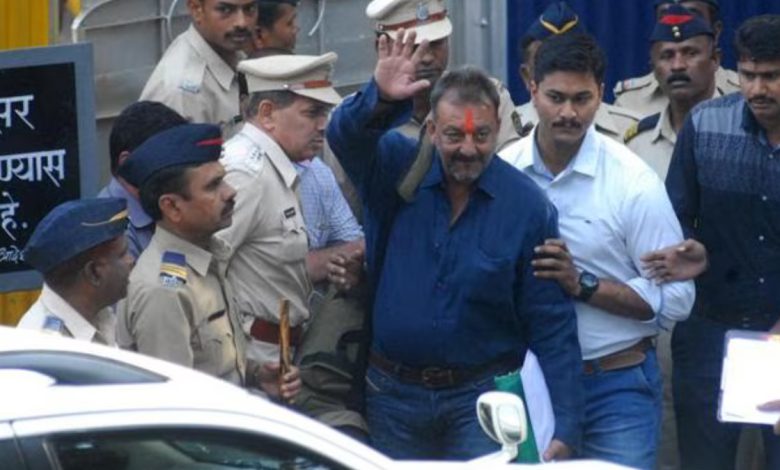
Sanjay Dutt didn’t take the 1993 Mumbai blasts verdict well. The man who prosecuted him is the one telling us exactly how it looked from a few feet away.
Ujjwal Nikam, the former special public prosecutor on one of India’s most closely watched criminal cases, walked through the courtroom’s final moments in a conversation with Lallantop. Dutt had been out on bail. Then the verdict came down, custody was ordered on the spot, and by Nikam’s account, Dutt could not hold it together.
Nikam on being blamed for someone else’s tears
Nikam said something that’s clearly stayed with him: every time Dutt broke down on camera, the public decided it was Nikam’s fault.
“Every time Sanjay Dutt cried, people held me responsible for that. The media can shape public perception of someone. When the court pronounced its verdict against Sanjay Dutt, he was naturally scared. He was out on bail, but the court ordered that he be taken into custody,” Nikam said.




It’s a strange kind of blame to carry being cast as the villain for someone else’s fear, just because you were the one asking the court for a harsher sentence.
The legal fight most people forget
Underneath the courtroom drama was a narrower legal question. Dutt had already been acquitted of terrorism and conspiracy charges the prosecution wasn’t contesting that. What remained was the Arms Act conviction, and whether Dutt would get the benefit of the Probation of Offenders Act.
“My argument was that Sanjay Dutt should not get the benefit of the Probation of Offenders Act. He was convicted under the Arms Act, though the court acquitted him of conspiracy charges, and we had no objection to that. However, I argued that he should be sentenced to seven years under the Arms Act,” Nikam said. Dutt’s defence argued for leniency on the grounds it was a first offence. The prosecution wasn’t having it.
The moment the verdict landed
Nikam’s sharpest memory is of Dutt right after the judgment was read out. “When the judgment was delivered, he was trembling. He kept saying, ‘No sir, I didn’t do anything wrong, sir. I will come back.’ He was virtually shaking. I was standing nearby and told him, ‘Sanju, the media is watching, please stand straight.’ Then I asked the police to take him away. Had I not motivated him at that moment, the media would have made me the villain. Everyone was against me,” he recalled.
Read that twice and it gets stranger: the prosecutor telling the man he’d just helped convict to stand up straight, because the cameras were rolling and somebody in that courtroom needed to look composed.
What came after
The Supreme Court sentenced Dutt to five years under the Arms Act in 2013. He served the sentence, was released in 2016, and returned to films where he’s worked steadily ever since.