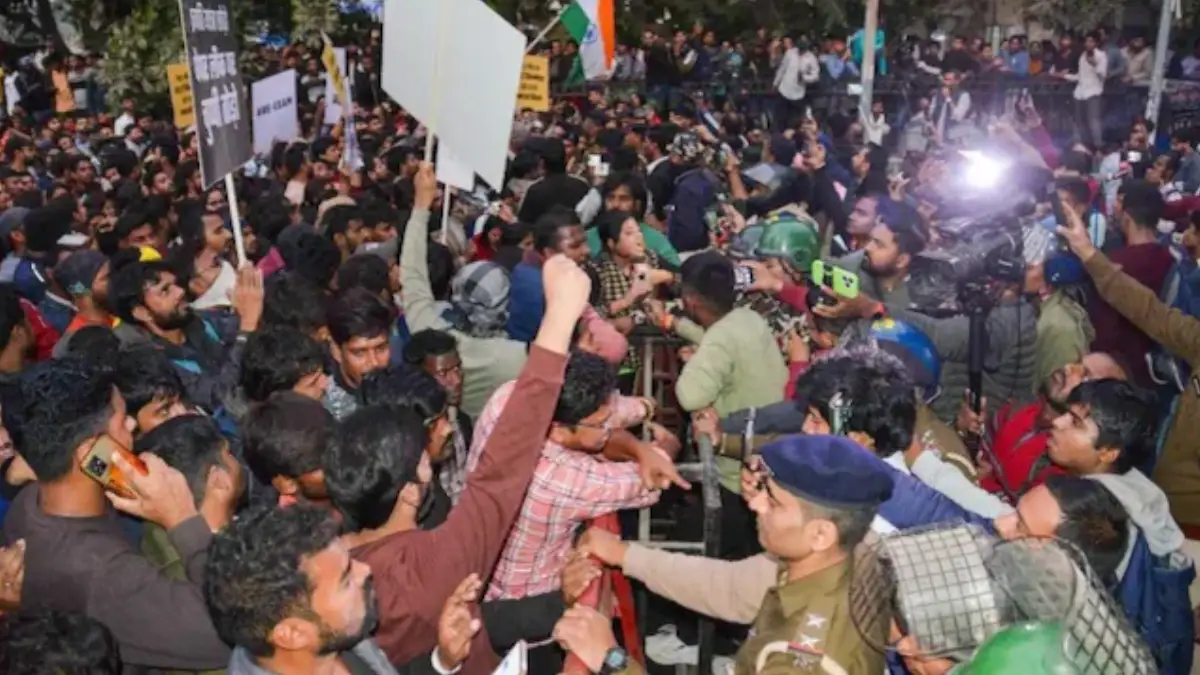
New Delhi : When the University Grants Commission notified its new Equity in Higher Education Institutions Regulations, it framed them as a necessary step to curb caste-based discrimination on campuses. But the announcement immediately raised a fundamental question: Does India not already have laws, court rulings, and institutional mechanisms to deal with discrimination?
Articles 14, 15 and 17 guarantee equality before law, prohibit discrimination on caste grounds, and abolish untouchability. These provisions apply to all public institutions, including universities. Beyond the Constitution, laws such as the SC/ST (Prevention of Atrocities) Act, service rules governing public employment, and university statutes already provide remedies against discriminatory behaviour.
Most central universities already have Equal Opportunity Cells, anti-ragging committees, internal complaints committees, and grievance portals mandated by existing UGC guidelines. Astha Anup Chaturvedi, Senior Lawyer, (constitutional and admin law) says India already has a comprehensive legal framework to address discrimination in higher education. “India has robust constitutional and statutory safeguards against discrimination, including explicit protections under Articles 14, 15 and 17 of the Constitution, along with judicially mandated grievance and enquiry mechanisms within public institutions,” she notes.
“The UGC’s 2026 Regulations do not create new anti-discrimination rights. What they do is convert existing norms into uniform, enforceable regulatory obligations for higher education institutions, mandating the establishment of Equal Opportunity Centres, equity committees, formal grievance redressal mechanisms, and compliance reporting to the UGC.”
However, she adds that the contentious element lies in enforcement. “What is new and debatable is the linkage of non-compliance to regulatory sanctions, including potential consequences for institutional recognition and funding. While the objective aligns with constitutional values, the structure and discretionary powers of these bodies raise important questions around procedural balance, due process, and uniform application across institutions.”
“The framework therefore merits scrutiny not for its intent, but for whether its enforcement architecture adheres to the constitutional principle of equality before law and established standards of administrative fairness,” Chaturvedi says. Legal experts and university administrators questioning the rules are not denying the reality of discrimination. Their concern lies elsewhere. First, they argue that the regulations duplicate existing protections without clearly explaining why current laws and court-mandated mechanisms are insufficient.
Read Also : BTS World Tour Sparking Global Tourism Boom as Search Interest Hits Record Highs
-

-

-

-