Supreme Court Upholds Madras High Court Ruling On Thirupparankundram Dargah, Restricts Daily Namaz
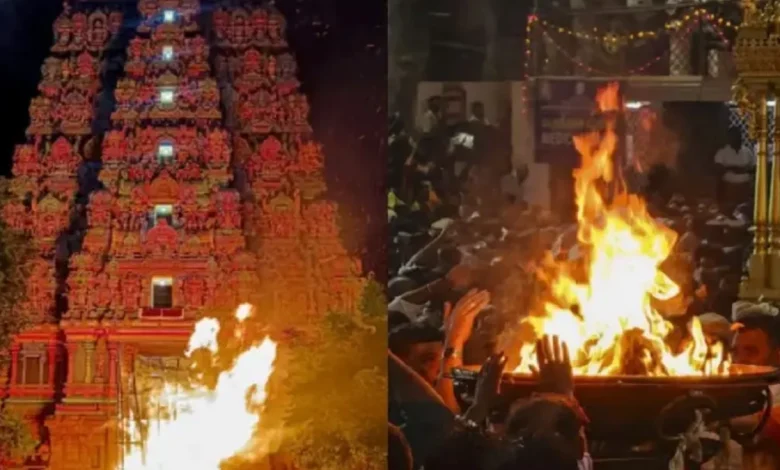
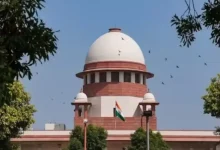
The Supreme Court on Monday affirmed the Madras High Court’s order limiting namaz offerings at the dargah situated on Thirupparankundram Hills in Tamil Nadu, ruling that Muslims are barred from conducting daily prayers at the location. The apex court termed the high court’s judgment a “very, very balanced order”.
The top court sustained the high court’s directive allowing namaz exclusively during Ramzan and on Bakrid at the dargah, while maintaining the prohibition on animal sacrifice on the premises. The Supreme Court’s decision came in response to an appeal lodged by Imam Hussain, a practising Muslim, who contested the Madras High Court’s verdict.
A bench consisting of Justice Aravind Kumar and Justice PB Varale refused to intervene in the case. Advocate Prashant Bhushan, representing Imam Hussain, argued that the area has never witnessed any law and order issues. Justice Kumar countered that the absence of law and order problems would have meant no Peace Committee meeting would have been necessary. “It seems to be a very, very balanced order,” Justice Kumar remarked.
“We do not propose to interfere with the order. Without expressing any opinion on the rights of the parties, the impugned order stands upheld,” the bench stated. The hill has been the subject of numerous disputes regarding religious practices, as it holds sacred significance for multiple communities. A petition was submitted to the Supreme Court challenging the Madras High Court’s order that permitted the lighting of a lamp on Thirupparankundram hill in Tamil Nadu, contingent upon approval from the Archaeological Survey of India (ASI) and police authorities.
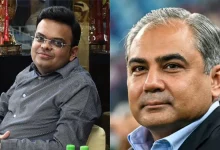
In his petition, the original petitioner Rama Ravikumar described the high court’s directions as an “unlawful” weakening of binding civil court decrees that recognise the Arulmigu Subramania Swamy Temple’s ownership and control of the hill, and as an “impermissible judicial intrusion” into an essential religious practice.
‘Devotees of another faith permitted access, usage rights, but Hindu…’
Ravikumar argued that while the high court acknowledged the temple’s entitlement to light Deepam at the ‘Deepathoon’ (stone pillar), it made that entitlement conditional by placing it under administrative discretion.
He submitted that the high court overstepped its jurisdiction by introducing new substantive restrictions despite the final decree definitively recognising the temple’s proprietary rights over the hill.
Claiming hostile discrimination, the petitioner stated that devotees of another faith receive access and usage rights up to the Nellithope area, whereas Hindu worship at the hilltop has been placed under multiple administrative controls without legal authority. On January 6, a division bench of the Madras High Court clarified that the location where the stone pillar stands belongs to the Sri Subramania Swamy Temple.
The appellants did not present “formidable evidence” demonstrating that Agama Sastra of Saivites forbids lighting the lamp at a location that is not directly above the deity in the sanctum sanctorum, the court had noted.
In its order, the high court had directed that the ‘Devasthanam’ (temple management) must light the lamp at the ‘Deepathoon’.