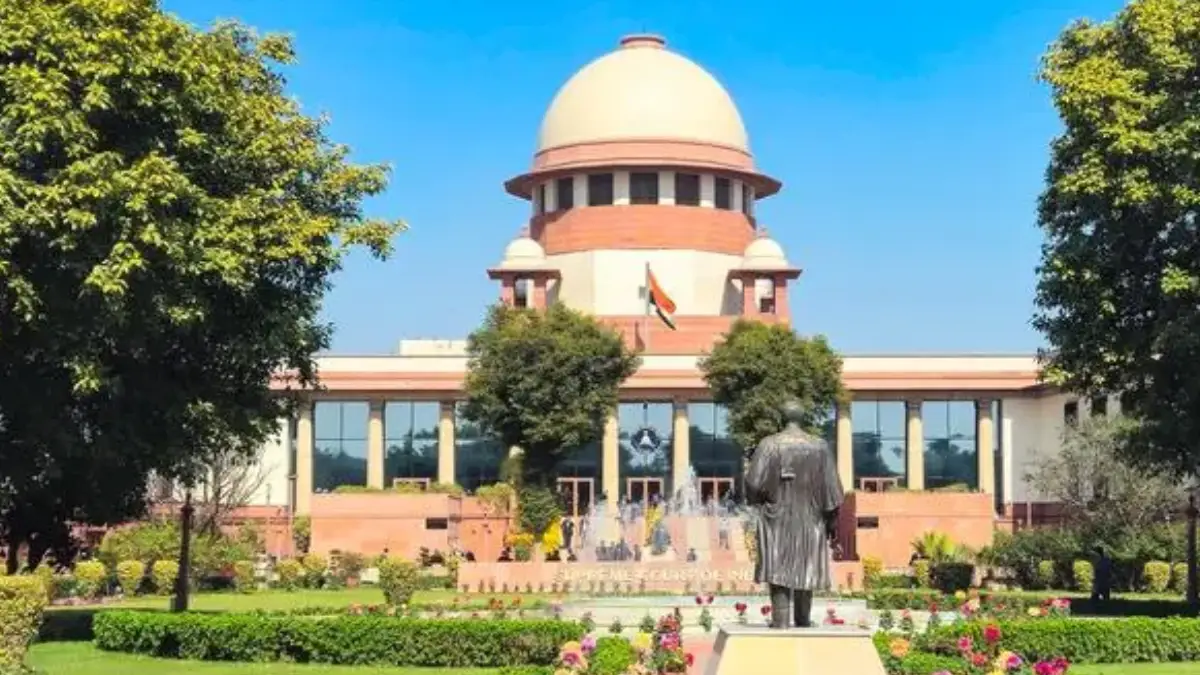
In a significant ruling, the Supreme Court has declared that walking on properly demarcated footpaths constitutes a fundamental right under the Indian Constitution. The decision underscores the priority of pedestrian safety over vehicular traffic on public roads.
A bench comprising Justice PS Narasimha and Justice AS Chandurkar observed that the right to walk is integral to the freedoms protected under Article 19(1)(d), which guarantees the right to move freely throughout the territory of India. This right is to be read in conjunction with other freedoms under Article 19, as well as Article 21, which protects the right to life and personal liberty.
The court emphasized that where roads exist, authorities bear an enforceable duty to demarcate and maintain footpaths for walkers. “If a road exists, there must then be a duty to ensure that a footpath is demarcated and maintained for walkers. This is an enforceable duty,” the bench stated.
The judgment stemmed from a motor accident compensation case involving the tragic death of a five-year-old boy. His father was escorting him to school around 9 a.m. when a tanker lorry struck the child from behind, causing fatal injuries to his waist and lower body. The incident occurred at a location lacking any footpath or pedestrian crossing.
ALSO READ: Supreme Court Allows NEET-UG 2026 Retest to Proceed, Defers Key Challenge to Larger Bench
In its order, the Supreme Court enhanced the compensation awarded to the child’s father to Rs 11,44,628, directing payment within two months. It overturned a High Court decision that had lowered the original amount.
The bench further clarified that violations of the right to walk on demarcated footpaths empower citizens to pursue constitutional and legal remedies against responsible authorities for restitution and compensation. This avenue remains independent of claims available under the Motor Vehicles Act, 1988.
The ruling highlights a persistent challenge in urban planning across Indian cities and towns, where infrastructure has long favored motorized transport at the expense of pedestrian safety. The court noted that humans walked long before the advent of wheels, positioning the right to walk as the primary form of movement under Article 19(1)(d). Safe, demarcated footpaths are therefore essential to realizing this fundamental freedom.
This decision is expected to strengthen accountability for public authorities in ensuring pedestrian-friendly infrastructure, potentially influencing future urban development policies and legal claims related to road safety. By affirming pedestrians’ rights, the judgment seeks to address the vulnerabilities faced by those on foot in a vehicle-dominated environment.