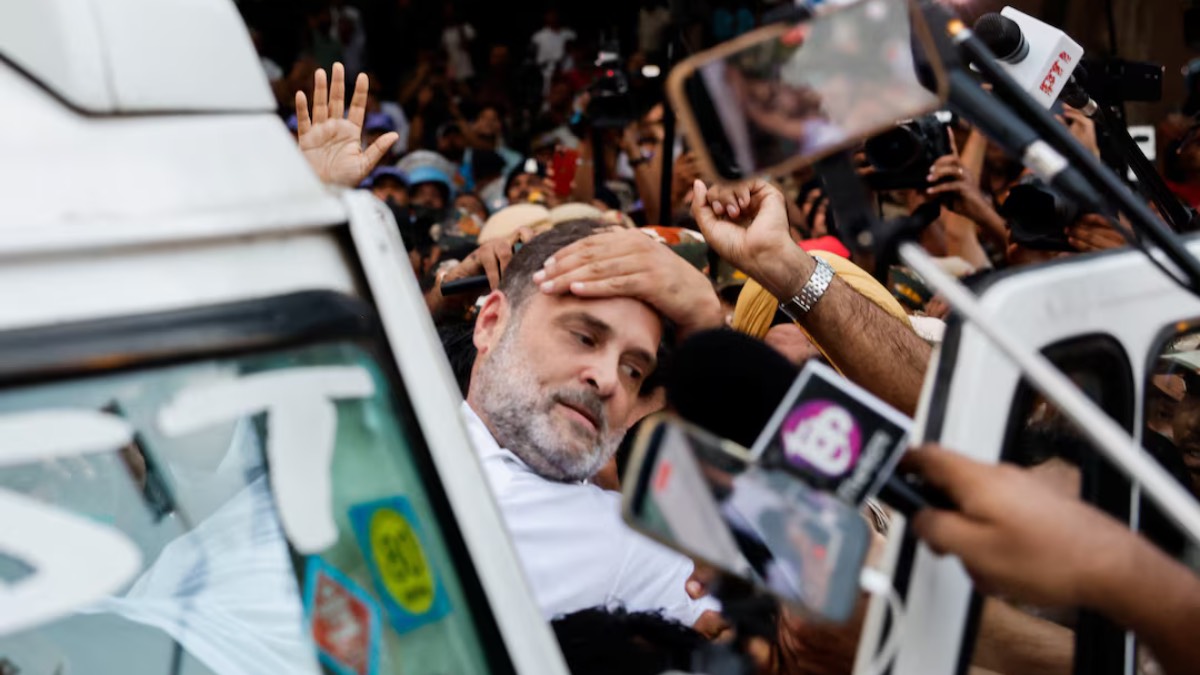
Solicitor General Tushar Mehta on Friday alleged before the Supreme Court that women police personnel were molested and injured during a Congress protest led by Rahul Gandhi in Delhi earlier this week.
“Please see visuals from two days ago. Lady police officers have been molested and injured,” Mehta told a bench headed by Chief Justice of India Surya Kant. He added that police personnel were verbally abused but acted responsibly. He argued that the demonstration was unlawful because permission had not been granted.
Background to the protest
The allegations relate to Wednesday’s protest by INDIA bloc MPs, who were stopped by police as they tried to march towards Jantar Mantar. The opposition leaders were protesting alleged “vote chori” and demanding the removal of Chief Election Commissioner Gyanesh Kumar.
Is he a Pervert?? LoP @RahulGandhi is clearly seen groping the woman constable of @DelhiPolice Shameless Congressis will still come out to defend him.. https://t.co/sUvOG9Atgu
— Rishi Kalia 🇮🇳 (@rkalia80) October 7, 2026
The BJP later accused Gandhi of pushing and inappropriately touching a woman police officer during a confrontation on Ashoka Road. BJP spokesperson Pradeep Bhandari shared a video clip on X, while party leader Gaurav Bhatia demanded an apology. The Congress had not immediately responded to the allegations.
Supreme Court on right to protest
The Supreme Court stressed that the right to protest must be balanced against the public’s right to move freely and access essential services.
Justice Joymalya Bagchi observed that, based on the material placed before the court, the police action appeared disproportionate. Lawyers for the petitioners raised concerns over metro station closures, train cancellations, border checks and alleged restrictions on hotel bookings.
Also Read:JNU Dismisses Professor and Congress MP Bimol Akoijam Over Sexual Harassment Allegations
The bench asked for the relevant police order so it could examine the scope and legality of the restrictions. It also indicated that protests could be regulated through attendance limits and safeguards, while making clear that highways could not be blocked.
-

-
-

-