
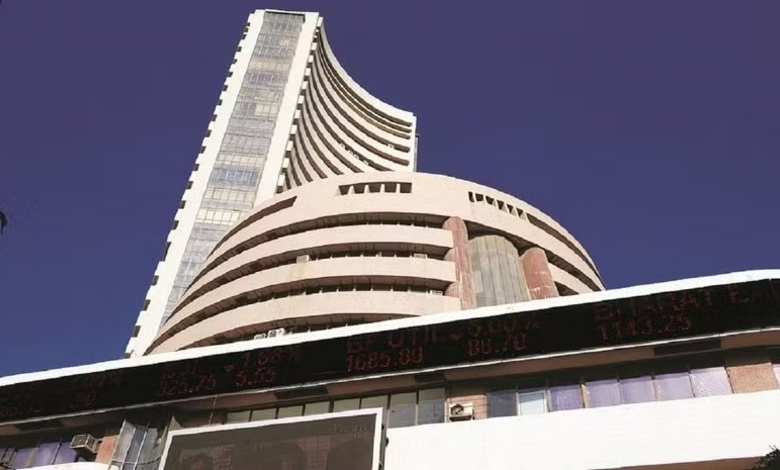
Indian equities opened sharply lower on Monday, extending weakness from global markets as escalating conflicts in the Middle East and rising oil prices heightened investor concerns. Fears of delayed monetary easing in the United States further dampened sentiment.
The BSE Sensex declined more than 800 points at the start of trading, opening 821.73 points, or 1.11 percent, lower at 73,421.61. The NSE Nifty 50 slipped below the 23,100 level, starting at 23,080.70, down 286 points or 1.22 percent. The Bank Nifty also fell 642.80 points, or 1.18 percent, to 53,853.45.
Selling pressure was widespread, with the Nifty Smallcap 100 and Nifty Midcap 100 indices each dropping over 1 percent. Sectoral performance was mostly negative, as the Nifty IT, Metals, Auto, and Realty indices declined more than 1.5 percent each. In contrast, the Nifty Media and Nifty Pharma indices posted modest gains.
Several interconnected factors contributed to the downturn. Asian markets faced significant losses, with the broader MSCI Asia ex-Japan index falling 2.7 percent. Japan’s Nikkei dropped 3.8 percent, led by declines in technology-related shares, while South Korea’s Kospi declined 4.8 percent after an earlier steeper fall. Hong Kong’s Hang Seng lost nearly 2 percent, and China’s CSI 300 slipped 1.5 percent. US stock futures also pointed lower.



Tensions in the Middle East intensified after strikes on military targets in Iran and retaliatory missile launches toward Israel. These developments raised uncertainties around regional stability and potential disruptions to energy supplies.
Crude oil prices surged in response, with Brent crude futures rising 3.39 percent to $96.24 per barrel and US crude gaining 3.17 percent to $93.41 per barrel. As a major importer, India faces risks from higher energy costs, including increased import expenses and pressure on the currency.
Stronger-than-expected US employment data for May also influenced sentiment. Nonfarm payrolls rose by 172,000 jobs, exceeding forecasts and boosting expectations for a possible Federal Reserve rate increase by the end of 2026. This reduced the attractiveness of emerging market assets like those in India.
From a technical perspective, the Nifty 50 remained below its key moving averages, displaying a lower highs and lower lows pattern. Immediate support was noted around 23,100 to 23,000, with potential further weakness toward 22,700-22,800 if breached. Resistance was seen near 23,500.
Overall, the session highlighted ongoing vulnerabilities in global risk appetite amid geopolitical uncertainties and shifting monetary policy expectations.