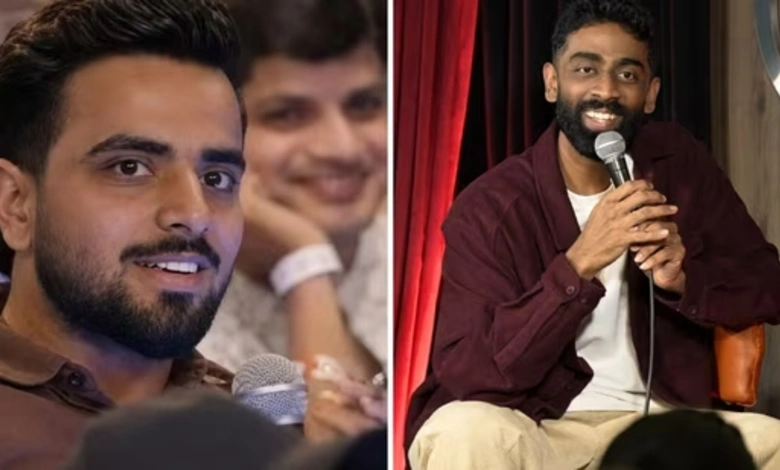
A stand-up performance by popular comedian Pranit More has ignited significant controversy after an audience member delivered a highly explicit monologue that drew widespread criticism for its misogynistic tone.
During a recent crowd-work segment in Gurugram, a 23-year-old man named Himanshu Jangra shared a detailed account of an encounter with a woman in her late 20s whom he met at a co-working space. He claimed she was showing interest in him and described going out with her, during which he spent ₹370 on biryani. He then expressed his intent to “vasool” or recover that amount, framing the expenditure as justification for expecting a sexual encounter. Jangra further elaborated on intimate details, including kissing and an attempt to escalate physical contact, referring to his fantasy of being with an older woman in crude terms.
The audience responded with loud applause and laughter throughout the extended narration, while More appeared to encourage the continuation rather than intervening. Clips of the incident spread rapidly online, prompting strong backlash against both the speaker and the comedian for not challenging the content.
More later addressed the matter on social media, acknowledging that the remarks did not align with his personal views. He admitted it was a lapse in judgment not to push back against the comments during the live interaction and stated he would handle similar situations with greater care in the future.
ALSO READ : Bigg Boss 19: Evicted Abhishek Bajaj Hails Pranit More as ‘True Player’ for Saving Ashnoor Kaur
The employer, Starvik Design, took swift action by terminating Jangra’s employment. In a public statement, the company’s leadership described the expressed views as unacceptable and inconsistent with organizational values. Although an internal review found no workplace complaints and colleagues viewed him as professional and respectful, the firm determined that the external incident impacted the workplace environment and client relations. The statement also noted the importance of accountability while leaving room for personal growth and change.
Social media reactions highlighted concerns over entitlement, objectification, and the normalization of such attitudes. Many called for men to actively condemn such behavior, emphasizing its broader implications for respect and safety. Some debated the appropriateness of professional consequences for off-duty comments, while others stressed the need for personal responsibility.
The episode has fueled discussions on the boundaries of humor in live comedy settings and the responsibilities of performers when audience interactions cross into problematic territory.
-
-
-
-