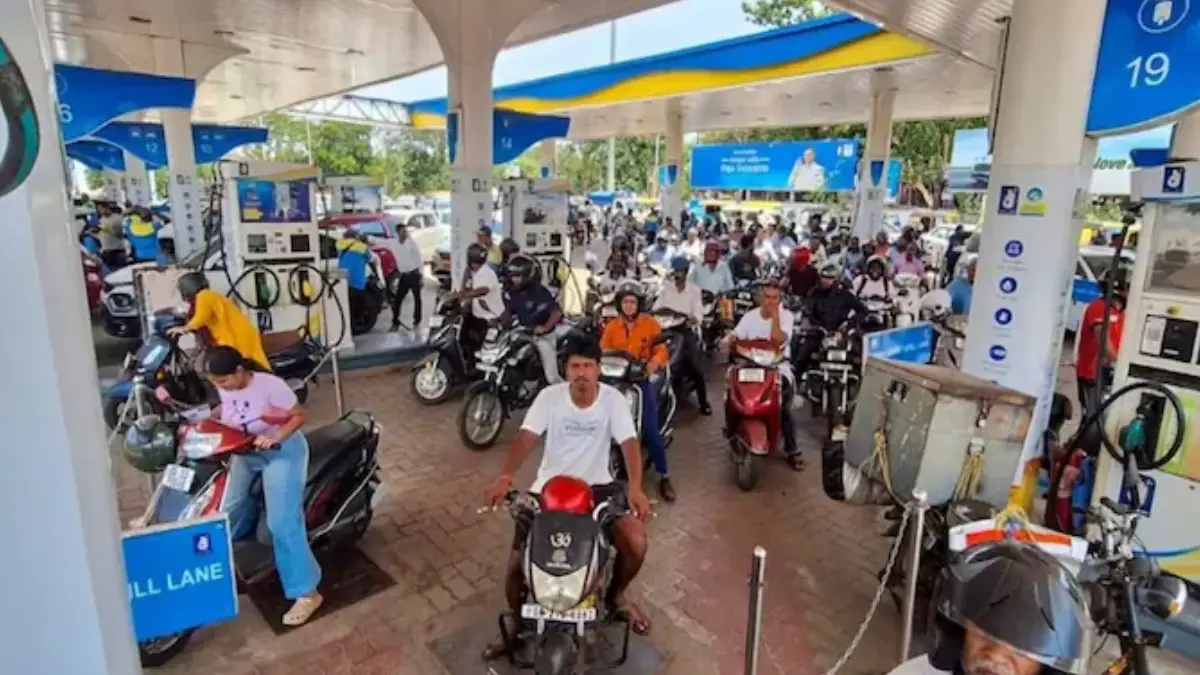
In a development that has heightened inflation concerns for Indian households already grappling with rising costs of vegetables, edible oils, and other essentials, petrol and diesel prices have climbed by more than Rs 7 per litre in just 11 days. Yet, financial experts suggest this may not be sufficient to fully address the challenges faced by the country’s oil marketing companies.
The three major state-run oil marketing companies (OMCs) Indian Oil Corporation, Bharat Petroleum Corporation Limited, and Hindustan Petroleum Corporation Limited continue to grapple with substantial under-recoveries despite four successive price adjustments in the recent period. These hikes, implemented in phases of Rs 3, 90 paise, 87 paise, and Rs 2.61 per litre, have provided some respite but fall short of bridging the gap entirely.
According to market estimates, petrol and diesel prices would theoretically need to increase by an additional Rs 28 to Rs 33 per litre for the OMCs to completely recover accumulated losses from previous months. Even after the latest revisions, analysts indicate that at least Rs 20 more per litre might be required to offset the financial strain.
This situation stems from a prolonged 74-day period during which OMCs absorbed losses amid surging global crude oil prices triggered by the Iran conflict that began on February 28. With India importing nearly 88 per cent of its crude requirements, the companies purchased fuel at elevated international rates while maintaining frozen retail prices, leading to cumulative losses reportedly exceeding Rs 1.2 lakh crore.
An energy sector specialist told that despite the recent retail price revisions, Indian OMCs remain under an unsustainable financial burden due to the lag between domestic adjustments and volatile global crude benchmarks, compounded by rupee pressure.
ALSO READ : Gold and Silver Price Surge as US-Iran Peace Hopes Ease
The recent hikes have helped narrow daily losses, which had peaked at nearly Rs 1,600 crore collectively for the OMCs. However, they have not eliminated the shortfall. Each 50 paise increase in fuel prices is estimated to boost the companies’ EBITDA by 7 to 11 per cent, depending on the specific OMC.
On a positive note, global crude prices eased by nearly 5 per cent amid expectations of a potential Iran-US understanding, which could stabilise supply routes. Nevertheless, analysts caution that normalisation of supply chains, insurance costs, and freight may take time, keeping some upward pressure on prices in the near term.
Policymakers face a delicate balancing act between protecting consumers from inflationary pressures — which affect transportation and broader goods prices — and ensuring the financial health of OMCs to maintain long-term supply stability. For now, the recent Rs 7.38 per litre increase offers only partial relief, as the underlying economics for oil companies remain unresolved.
-

-

-
-