
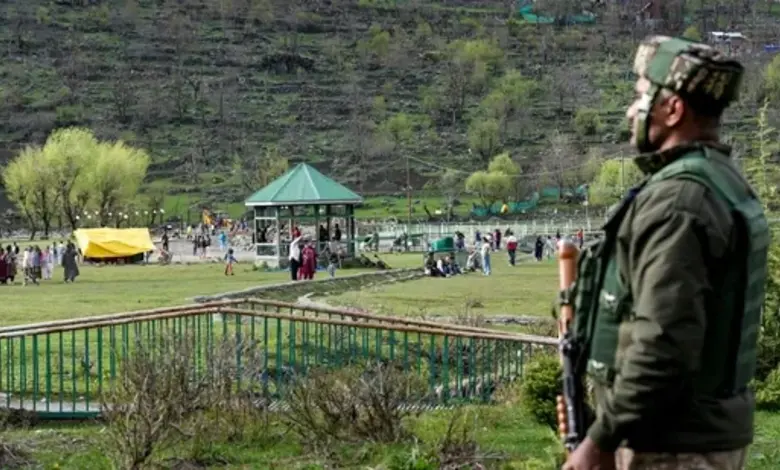
In the aftermath of the deadly Pahalgam terror attack that killed 26 civilians, Indian security agencies launched an intensive 93-day operation to identify, track, and neutralise those responsible. According to a report, the mission combined intelligence gathering, surveillance, and coordinated military action to dismantle the network behind the assault.
The attack, carried out in April 2025 at the Baisaran meadow, triggered a nationwide security response. Investigators quickly established that the attackers were linked to Pakistan-based terror groups, reinforcing concerns over cross-border involvement.
Security agencies, including the Army, Jammu and Kashmir Police, and intelligence units, worked in tandem to trace the perpetrators. The operation relied heavily on technical intelligence such as intercepted communications, satellite tracking, and forensic evidence recovered from the attack site. Officials also analysed movement patterns and support networks within the Valley to narrow down the suspects’ locations.
ALSO READ : PM Modi Marks Pahalgam Attack Anniversary, Says Victims “Will Never Be Forgotten”




The attackers were affiliated with Lashkar-e-Taiba and operated under the banner of The Resistance Front, a proxy outfit. The individuals involved had reportedly infiltrated into Indian territory earlier and remained active with logistical support from local operatives.
Over the course of three months, security forces conducted multiple search-and-cordon operations across south Kashmir. These missions were often based on precise intelligence inputs and involved close coordination between ground troops and surveillance units. Gradually, the net tightened around the militants.
The final phase of the operation culminated in targeted encounters in which the attackers were eliminated. Officials described the mission as a significant counter-terror success, highlighting the effectiveness of sustained intelligence-led operations.
The report noted that the investigation also exposed a broader support structure, including cross-border handlers and local facilitators. This has prompted continued efforts to dismantle terror infrastructure and prevent similar attacks in the future.
The Pahalgam operation underscores India’s evolving counter-terror strategy—marked by prolonged surveillance, inter-agency coordination, and decisive action on the ground.