
Opposition Leaders’ March to Supreme Court Stopped by Police Amid Protests Against Election Commission
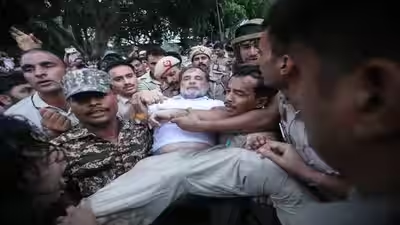
Thousands of people gathered in central Delhi on Monday as leaders of the INDIA opposition alliance began a march towards the Supreme Court. The protest challenged Chief Election Commissioner Gyanesh Kumar over allegations of electoral irregularities, referred to by the opposition as “vote theft.”
The demonstration, organised under the banner “Chalo Delhi – March for Democracy,” saw crowds fill the stretch between Connaught Place and Mandi House. Security was tightened across the national capital. Opposition leaders assembled near the Connaught Place–Barakhamba Road junction. Rahul Gandhi led the march, accompanied by his sister Priyanka Gandhi and AISA chief Neha Bora, flanked by supporters and other INDIA bloc leaders.
After a brief march, police stopped the procession. Visuals showed Rahul Gandhi standing on a truck alongside several opposition figures, including Samajwadi Party chief Akhilesh Yadav and RJD leader Tejashwi Yadav.
While the leaders marched, the alliance’s legal team filed a petition in the Supreme Court against the poll panel chief. The opposition has demanded Kumar’s resignation and said it intends to continue pressing its case.


Addressing a press conference earlier, Rahul Gandhi stated that the opposition’s effort would continue until the Election Commission’s leadership changed, the Constitution was upheld and the electoral system was overhauled. He called on Kumar to resign and claimed the chief election commissioner was under pressure. Gandhi said the alliance had previously written to the Chief Justice of India, who directed them to file a petition.
He appealed to citizens across political lines to support the march, describing it as a fight for democracy and the Constitution rather than the interests of any single party. In a social media message, he invited people to join at Connaught Place or raise their voice from wherever they were, using the hashtag #ChaloDilli. He also said supporters of the ruling party who believed the Constitution was under attack were welcome to participate.
Gandhi described the protests as a “tandav” and said the movement was open to anyone willing to join. He emphasised that the campaign would not end with Monday’s march and could continue for days or years if necessary.
The opposition’s criticism of Kumar intensified after a report indicated that two election commissioners had recorded objections at least 14 times over the preceding 10 months, mostly concerning decisions related to the Special Intensive Revision of electoral rolls. The Election Commission has maintained that differences of opinion are a normal part of institutional decision-making.
The petition has been filed, and the investigation into the broader allegations continues.