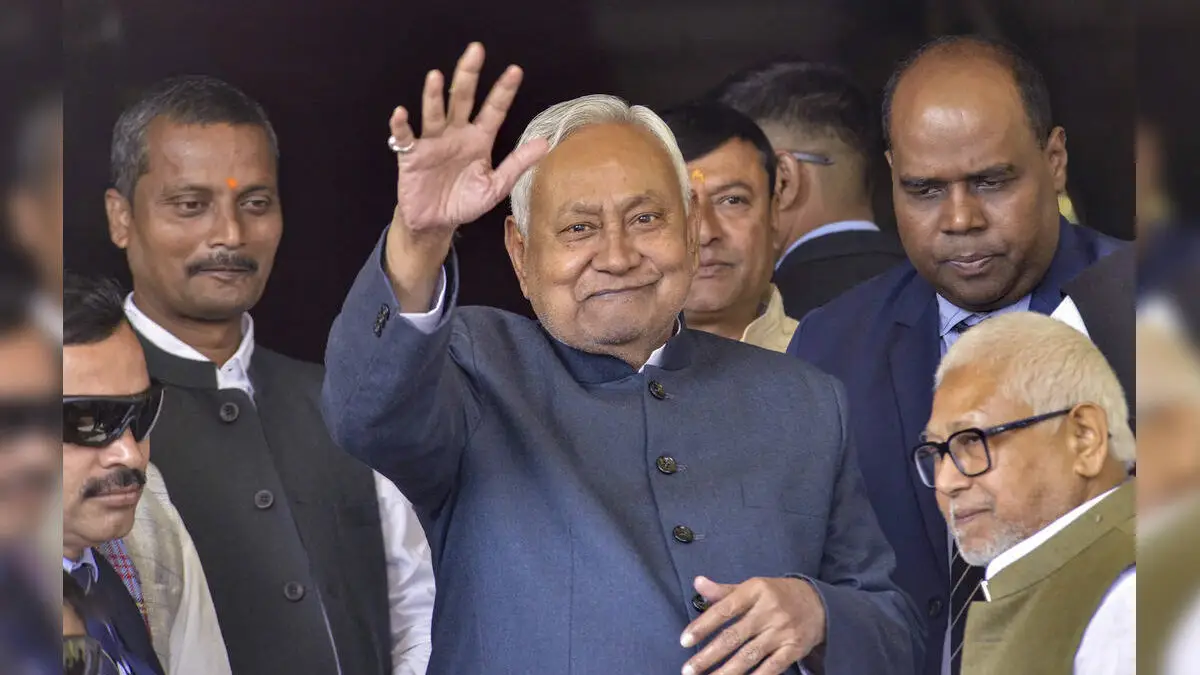
Bihar Chief Minister Nitish Kumar filed his nomination for the Rajya Sabha on Thursday, a step widely interpreted as the conclusion of his more than 20-year hold on the state’s top executive post and a pivotal shift paving the way for the Bharatiya Janata Party (BJP) to assume leadership in the politically significant state.
The filing occurred at the Bihar Assembly in Patna, with Union Home Minister Amit Shah present alongside other National Democratic Alliance (NDA) figures, underscoring the coordinated nature of the transition within the ruling coalition. Nitish, who secured a fresh mandate for the NDA in the November assembly elections and took oath for a record 10th term just four months earlier, framed his decision as the realization of a long-held personal goal.
In a post on X, he explained that since the start of his political career, he had aspired to serve in both houses of the Bihar legislature as well as both houses of Parliament. Having already been a member of the state assembly’s two chambers and the Lok Sabha, he noted that the Rajya Sabha remained the missing piece.
Sources indicate the leadership change in Bihar is expected to take place following the Rajya Sabha polls scheduled for March 16. While the BJP has not confirmed whether Nitish will receive a Union cabinet position befitting his experience, reports point to the saffron party claiming the chief minister’s role, relegating the Janata Dal (United) — or JDU — to a supporting position in the alliance.
ALSO READ : Nitish Kumar Confirms Rajya Sabha Bid Ahead Of Nomination, Thanked Voters For Their Long-Standing Support
Deputy Chief Minister Samrat Chaudhary, an OBC leader from the BJP, is viewed as the leading candidate to succeed Nitish, though party insiders have not dismissed the possibility of an unexpected choice. The JDU is anticipated to secure two deputy chief minister slots, one potentially allocated to Nitish’s son Nishant Kumar to ease the transition for the ally.
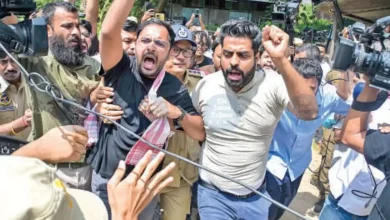
The move has stirred discontent among JDU ranks. Supporters gathered outside Nitish’s official residence and the party headquarters in Patna, voicing suspicions of a “conspiracy” involving internal party elements and the BJP to sideline their leader. Many expressed betrayal over the perceived abandonment of the NDA’s campaign promise — “Pachis se tees, phirse Nitish” — which had assured another five years under his stewardship.
Protests escalated to vandalism at the JDU office, where arrangements for welcoming Nishant into active politics were damaged. Nitish sought to calm the unrest, assuring workers that his bond with them would endure and that he would continue advocating for Bihar’s progress while offering full backing to the incoming administration.
The sequence of events bore the clear influence of Amit Shah, a key BJP strategist. Speculation intensified after Shah’s arrival in Patna, where he met state BJP leaders before accompanying Nitish and BJP national president Nitin Nabin to file nominations.
Shah later praised Nitish on X for his contributions to ending “jungle raaj” in Bihar and strengthening NDA efforts toward inclusive development.
Opposition voices were swift in criticism. RJD leader Tejashwi Yadav likened the situation to Maharashtra, accusing the BJP of “hijacking” Nitish and undermining the electoral mandate. RJD Rajya Sabha MP Manoj Jha suggested the plan originated in Delhi.
The development reflects a recurring BJP strategy in states with strong regional forces: entering via alliances and gradually asserting dominance, as observed in Maharashtra with the Shiv Sena split.
-
-

-
-