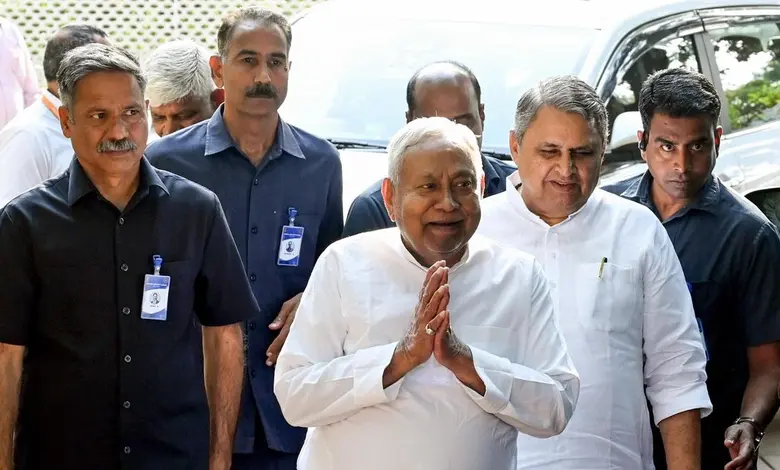
New Delhi : Bihar Chief Minister Nitish Kumar was sworn in as a member of the Rajya Sabha on Friday in a low-key ceremony held in the chamber of the Upper House chairman.
The oath of office was administered by Rajya Sabha Chairman C.P. Radhakrishnan. The brief event marked the formal induction of the veteran Bihar leader into the parliamentary body while he continues to head the state government in Patna.
Kumar, who has long been a prominent figure in national and state politics, took the oath amid his ongoing responsibilities as Chief Minister. His entry into the Rajya Sabha comes at a time when questions around lawmakers’ compensation, including monthly salary, constituency allowances, and other official perks, frequently draw public attention. As a sitting member of the Upper House, Kumar will now be entitled to the standard emoluments and facilities extended to Rajya Sabha MPs, in addition to his state-level entitlements as Chief Minister.
The development has spotlighted the financial dimensions of holding dual high offices. While the exact salary figures for Rajya Sabha members are well-documented under parliamentary rules — covering basic pay, dearness allowance, and various reimbursements — the simultaneous role as Chief Minister adds another layer to the overall monetary package associated with public service at these levels.
ALSO READ : Nitish Kumar Set to Quit Bihar Assembly Today
Sources close to the proceedings described the swearing-in as a straightforward administrative step, completed without fanfare. No major political statements were issued immediately after the oath-taking.
Kumar’s nomination and the procedural aspects leading to this moment. The event was also covered by other national agencies, including references carried by PTI, reflecting wide interest in the Bihar leader’s parliamentary journey.
Kumar’s presence in the Rajya Sabha is expected to strengthen the voice of Bihar in the Upper House, even as he balances legislative duties at the Centre with governance back home. Observers note that such transitions often prompt renewed discussions on the remuneration structures for elected representatives and the transparency of public funds allocated for their roles.
-

-

-

-