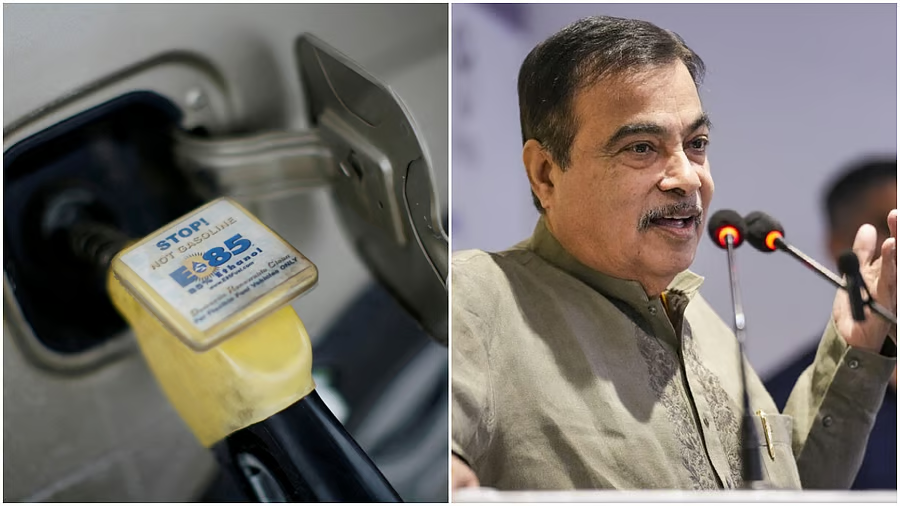
New Delhi: Union Minister for Road Transport and Highways Nitin Gadkari has approved regulations allowing the use of 100 per cent ethanol as fuel for vehicles, marking a significant step towards alternative energy adoption in India. The announcement was made during a press conference in Nagpur, where the minister said he had signed the file granting legal approval for the move.
According to PTI, Gadkari said the initiative is aimed at reducing India’s dependence on imported fossil fuels and promoting cleaner transportation alternatives.
Automakers Preparing Ethanol-Compatible Vehicles
The minister stated that several automobile manufacturers are preparing to launch vehicles capable of running entirely on ethanol fuel in the coming weeks. Gadkari has earlier spoken about ethanol-powered two-wheelers from companies such as Bajaj Auto, TVS Motor Company and Hero MotoCorp.
He had also previously announced plans to launch ethanol-powered versions of vehicles from Toyota, including flex-fuel models capable of generating electricity alongside ethanol use.
Push Towards Green Fuel Alternatives
Gadkari has repeatedly advocated for alternative fuels, saying India should work towards achieving complete ethanol blending in the future. He has maintained that reducing dependence on petrol and diesel is necessary for energy security, lowering pollution and cutting the country’s fuel import bill.
#WATCH | Nagpur, Maharashtra: Union Minister Nitin Gadkari says, “Last night at 8 PM, I signed the file, finalising the regulations to legally authorise the use of 100% ethanol. I am delighted to share that I, along with Hardeep Singh Puri, had the opportunity to launch the 100%… pic.twitter.com/BDIyTZGZF4
— ANI (@ANI) June 13, 2026
The minister also highlighted the use of biofuels and innovations such as producing bitumen from rice straw as part of the government’s broader sustainability efforts.
Concerns Over Ethanol Fuel Adoption
While the government continues to push for ethanol-based mobility, concerns have also been raised regarding vehicle compatibility and performance. Reuters earlier reported that some automobile industry executives and motorists expressed worries over mileage reduction and the impact of higher ethanol blends on older vehicles.
Discussions around ethanol blending have also triggered mixed reactions on social media platforms and online forums, with some users questioning infrastructure readiness and maintenance challenges for existing vehicles.
India’s Ethanol Transition
India has been gradually increasing ethanol blending in fuel as part of its clean energy goals. Reports suggest the country’s mobility strategy includes expanding flex-fuel and ethanol-compatible vehicles while scaling up fuel production and distribution infrastructure.
Also Read: US Statement On Indian Mariners’ Deaths Sparks Outrage; Shashi Tharoor Calls Response ‘Insensitive’