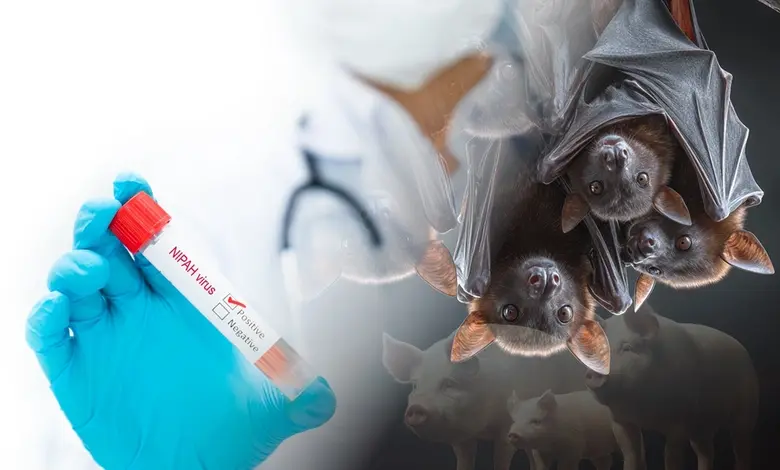
New Delhi : Health officials are closely monitoring fresh confirmed cases of the Nipah virus in India, prompting increased vigilance and screening in parts of Asia as authorities seek to limit its spread.
The virus is a zoonotic pathogen carried by fruit bats and other animals, which can infect humans directly from animals or through contaminated food, and in rare cases spread between people through close contact.
Early signs of infection typically resemble common illnesses, including fever, headache, muscle pain, vomiting and sore throat. As the condition progresses, neurological symptoms such as confusion, drowsiness and encephalitis may arise, and severe respiratory distress is also possible in advanced cases.
Also Read : Nipah Virus Suspected in West Bengal: Two Healthcare Workers Critical, Centre Deploys Emergency Team
The disease’s incubation period spans about 3–14 days, though longer durations have been observed in rare cases. Although many recover with supportive care, survivors may experience long-term neurological effects, and the virus has a historically high fatality rate, often between 40% and 75% depending on outbreak conditions and clinical management.
There is no approved vaccine or specific antiviral treatment for Nipah at present, so prevention and early detection remain crucial. Health authorities recommend avoiding direct contact with fruit bats, sick animals or their bodily fluids, and steering clear of foods potentially contaminated by bats, such as raw date palm sap. Rigorous hand hygiene, thorough washing of fruits and vegetables, and minimizing close contact with infected individuals are also advised to reduce transmission risk.
Public health teams in India have engaged in contact tracing, surveillance and isolation measures to contain infections, and international airport screening has been stepped up in several neighbouring countries as a precautionary measure.
-

-

-

-