
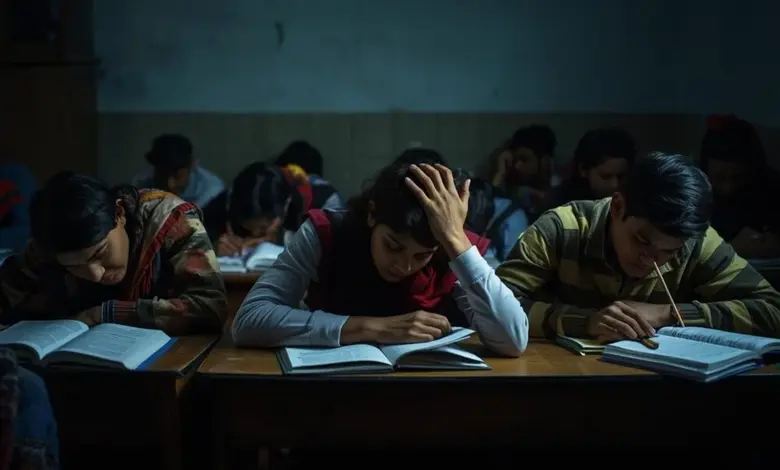
In a swift operation, Rajasthan Police have arrested a 19-year-old student from Bhilwara for allegedly selling counterfeit question papers for the upcoming NEET-UG retest through a Telegram channel. The arrest took place early Friday, only three days ahead of the scheduled re-examination on June 21.
The accused, identified as Akash Choudhary, operated the channel under the name ‘Paper Mafia’. Authorities say he used a US-based VPN and proxy network to mask his identity while targeting anxious aspirants. He reportedly charged ₹4,000 for each fake paper, with payments collected via QR code transfers. The channel had around 52 members at the time of the raid.
Acting on specific intelligence, police raided Choudhary’s residence in Patel Nagar, Bhilwara. Officers recovered a mobile phone, NEET study materials, and various documents from the premises. Investigators believe the suspect created the forged papers by scanning pages from standard preparation books and presenting them as authentic retest materials.
Choudhary, originally from the Rawatsar area in Churu district, had been living in Bhilwara for nearly 25 years. He completed his schooling locally before moving to Jaipur to prepare for competitive examinations. He had returned home just two days prior to his detention.


A case has been registered against him under relevant sections for cheating, circulation of fake examination papers, provisions of the IT Act, and the Public Examination Act. Police are now examining his bank transactions and digital records to assess the scale of the operation, determine how many candidates may have been deceived, and identify any potential accomplices.
The incident comes amid heightened concerns over the integrity of the medical entrance examination. The original test faced allegations of irregularities, prompting authorities to cancel it and schedule a retest. Platform restrictions on certain messaging services have been implemented in connection with the re-examination to curb the spread of misinformation and fraudulent activities.
This case highlights ongoing challenges in preventing digital fraud targeting students during critical examination periods. Authorities continue to urge aspirants to rely solely on official channels for information and avoid unverified sources promising leaked or advance materials