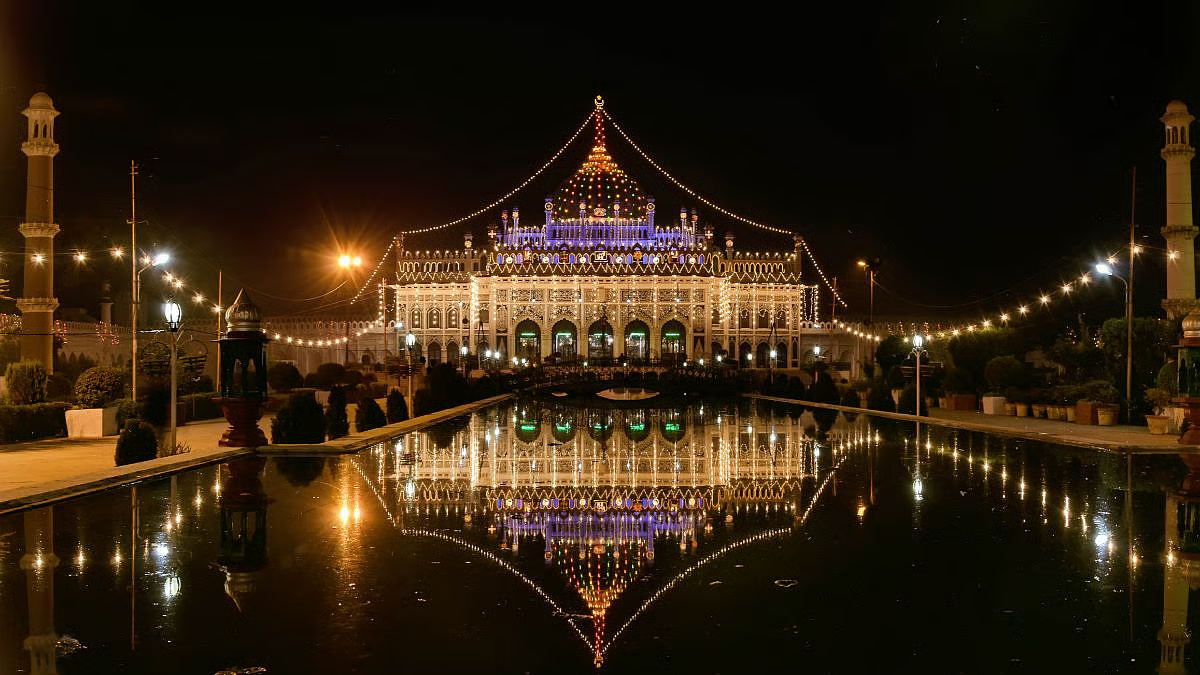
Muharram marks the official commencement of the Islamic lunar calendar, representing a deeply revered period for Muslims globally. Ranking as the second most sacred month of the year after Ramadan, it serves as a season of heightened spiritual reflection, historic commemoration, and profound reverence.
According to contextual explanations provided by the Free Press Journal, this month carries entirely distinct meanings, rituals, and traditions across different communities within Islam.
The Foundation of the Hijri Calendar
The Islamic New Year, or Al Hijri, begins on the first day of Muharram. The name “Muharram” itself translates roughly to “forbidden” or “sacred,” originating from an ancient divine decree that strictly prohibited warfare and conflict during this time.
Unlike the standard solar Gregorian calendar, the Islamic calendar relies completely on regional moon sightings to establish dates. Because lunar years are roughly 11 days shorter than solar years, the exact arrival of Muharram shifts annually across the seasonal cycle.
The Dual Facets of Observance: Sunni and Shia Traditions
While Muharram unites the global Muslim population in prayer and reflection, the foundational rituals performed during the month diverge significantly based on denominational traditions. The Free Press Journal notes these distinct practices:
The Shia Perspective: The Solemn Mourning of Ashura
For the Shia community, Muharram is fundamentally a month of intense mourning. It builds up toward the tenth day, known as the Day of Ashura. This day commemorates the martyrdom of Imam Hussain Ibn Ali, the grandson of Prophet Muhammad, who was killed alongside his family and followers during the historic Battle of Karbala in 680 CE.
To honor his stand against oppression and tyranny, Shia devotees engage in:
- Dressing in black attire to symbolize grief and respect.
- Participating in massive public mourning processions (Julus).
- Reenacting the Battle of Karbala through passion plays.
- Gathering in specialized congregation halls (Imambargahs) to listen to elegies and historical recitations.
The Sunni Perspective: Gratitude and Fasting
For Sunni Muslims, the Day of Ashura is marked as a day of salvation and gratitude rather than absolute mourning. According to Islamic tradition, this was the specific day Almighty Allah parted the Red Sea to rescue Prophet Moses (Musa) and the Israelites from the tyranny of the Egyptian Pharaoh.
To commemorate this divine intervention, Sunni practices include:
- Observing voluntary fasts on the tenth day of Muharram, often paired with a fast on the ninth or eleventh day as recommended by prophetic tradition.
- Engaging in extra prayers and spending quiet hours reflecting on spiritual resilience.
A Universal Period of Renewal
Across all traditions, the opening of the Islamic calendar remains a vital time for charity, communal bonding, and personal resolution. Whether observed through the solemn commemoration of historical sacrifice or through quiet fasting and gratitude, Muharram continues to stand as a powerful pillar of faith, justice, and spiritual renewal for millions across the globe.
Also Read: EPFO System Downtime: Temporary Outage Precedes Historic UPI and ATM Launch
-

-

-

-