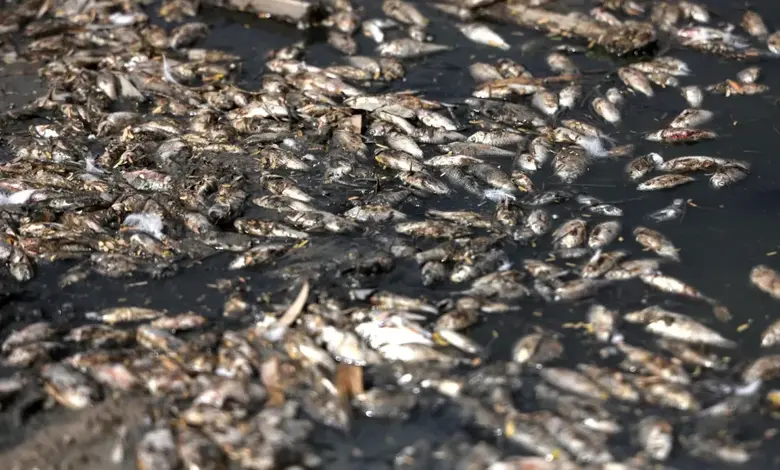
The nation is experiencing a series of worrying events in states including Andhra Pradesh, Delhi, Gujarat (Kutch), and Rajasthan, among other major water bodies across the country. The mass mortality of fish in these rivers and lakes is being reported, with causes varying by region; some indicate natural phenomena, while others claim human-induced factors. Fish naturally die when dissolved oxygen levels in water drop, a condition often caused by contamination with industrial effluents or exposure to extreme heat.
The recent event at the Boyapadu coastline in Visakhapatnam, where thousands of fish were found dead on June 20, revealed an immense concentration of Trichodesmium cells in collected water samples. The Visakhapatnam Regional Centre of the Central Marine Fisheries Research Institute (CMFRI) noted that the mass-scale fish mortality along the Boyapadu stream has vastly affected common pony fish. The incident coincided with an algal bloom near the shore. Local fishermen allege that industrial chemicals released into the water have affected marine life, but laboratory’s preliminary examinations have yet to suggest a definitive cause. Scientifically, the decay of Trichodesmium cells leads to oxygen depletion, which causes distress to marine life. While one cause of cell decay is natural population explosions, where older cells die off, a definitive cause backed by comprehensive study is still pending.
Another case of fish annihilation occurred in Kutch, Gujarat, where a large number of fish were found dead in the Chari Dhandh water body. In videos taken during the scorching heat, fish were seen floating on one side of the water. According to a forest officer, the cause was the loss of water level, which he claimed is a natural part of the final phase of the heatwave. He asserted that there is no suspicious cause involved.
A similar case of mass fish mortality occurred around a month ago in Delhi’s Sanjay Lake, which indicated something worrisome. As Delhi’s largest artificial water body, spanning 17 hectares, the lake’s water levels traditionally depended on groundwater but were later supplemented by treated water. Fish deaths were reported on May 21; while authorities initially claimed the heatwave was the cause, activists pointed to declining water levels. Later, the Delhi Jal Board (DJB) claimed that a supply pipeline had burst due to the burning of waste near a sewage treatment plant, while the Delhi Development Authority (DDA) accused the DJB of failing to provide alternatives. This exposed poor coordination between the leading agencies. Finally, the South Asia Network on Dams, Rivers and People (SANDRP) stated, “This mass fish death episode amply demonstrates the level of inefficiency prevailing among the multiple agencies managing the lakes in Delhi. It also exposes the deep institutional failures affecting the water governance system in the national capital. Blaming the heat spell will only act as a cover-up, allowing the real culprits to go scot-free. The incident indeed warrants a thorough independent probe and strict action against all involved.”
The persistent trend of mass fish deaths has only worsened over the years. Whether driven by natural cycles or environmental degradation influenced by human deeds, these events leave us with several questions and a pressing need to protect marine life already suffering immense distress.
-

-

-

-