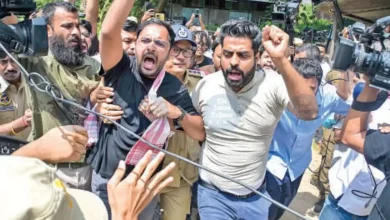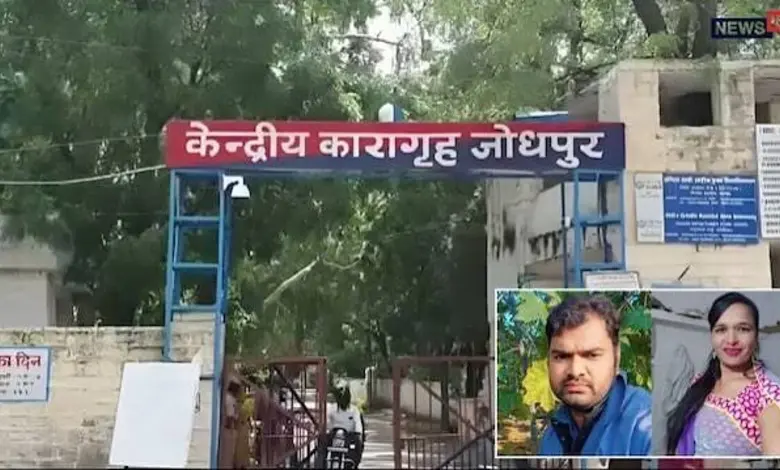
Jaipur: Not every love story begins with stolen glances in crowded streets or chance encounters at a railway station. Some are born where hope is rationed, freedom is measured, and every sunrise is counted behind prison walls. In Rajasthan’s Mandore Open Jail, where the echoes of past crimes often drown out dreams of tomorrow, two life convicts chose to write a different ending. Amid prison uniforms, security checks and legal paperwork, wedding garlands replaced handcuffs, the sacred fire burned inside a correctional facility, and seven vows quietly challenged the belief that a prison sentence ends every chapter of life.
In a landmark moment for India’s correctional system, 33 year old Moolaram Bhati and 31 year old Seema Ghadse, both serving life sentences in separate murder cases, got married inside the Mandore Open Air Camp in Jodhpur after receiving permission from the Rajasthan High Court. The ceremony, held under tight supervision, became one of the rare instances in the country where a prison transformed into a wedding venue rather than a place of punishment. The court held that the right of two consenting adults to marry is a part of the fundamental right to life and personal liberty guaranteed under Article 21 of the Constitution, and that imprisonment alone does not extinguish this right.
A Love Story That Began Behind Prison Walls
Contrary to speculation, Moolaram and Seema did not know each other before entering prison. Their paths crossed only after both were shifted to the Mandore Open Air Camp because of their good conduct.
Moolaram, originally from Rajasthan’s Nagaur district, had been transferred from Ajmer Jail to the open prison nearly two years ago. Seema, originally from Mumbai and lodged earlier in a women’s prison, arrived at the camp around one and a half years ago. Since inmates at open prisons are allowed to work and interact during daily activities, the two frequently met while engaged in agricultural work. What began as regular conversations gradually turned into companionship and eventually love. According to the report placed before the High Court, the two were in a live in relationship within the framework permitted at the open camp and decided to formalise their relationship through marriage.

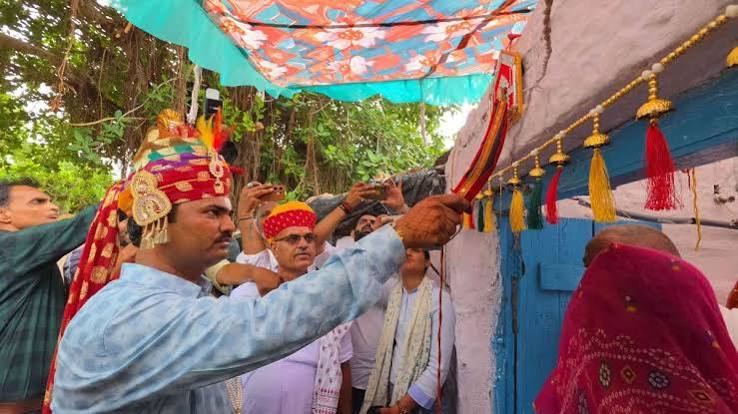
Who Are Moolaram and Seema?
Moolaram Bhati has been in judicial custody since 16 February 2017. He was later convicted by an Additional Sessions Court in Nagaur for the murder of a neighbour. The conviction included offences under Sections 302 (murder), 201 (causing disappearance of evidence) and 404 (dishonest misappropriation of a deceased person’s property) of the Indian Penal Code. According to the prosecution, the victim was allegedly taken away on a motorcycle following a dispute between two families, and the body was later recovered from a water tank.
Seema Ghadse, originally from Maharashtra, married a man in Jodhpur in 2016. According to the prosecution, only a few months after the wedding, her husband was found dead. Investigators alleged that she slit his wrists while he slept and initially attempted to portray the incident as a burglary. She was later convicted of murder and sentenced to life imprisonment.
Why Were They in an Open Jail?
Unlike conventional prisons, Rajasthan’s open air camps are reserved for prisoners who have demonstrated consistently good conduct over the years. Eligible inmates are allowed to work, earn wages, and prepare for eventual reintegration into society while remaining under prison supervision. Their transfer to the Mandore Open Air Camp reflected the authorities assessment of their behaviour and rehabilitation prospects rather than any reduction in sentence.
How Did They Get Permission to Marry?
The marriage did not happen automatically.
Moolaram approached the Rajasthan High Court by filing a temporary suspension of sentence application, requesting permission to marry Seema inside the open jail. During the proceedings, the State government submitted a report confirming that both prisoners had voluntarily chosen to marry and informed the court that it had no objection if the ceremony was conducted according to prison rules.
The Division Bench of Justice Pushpendra Singh Bhati and Justice Praveer Bhatnagar accepted the request. The judges observed that marriage is a recognised social institution across religions and cultures and that the constitutional right to marry survives imprisonment. They further noted that allowing such marriages supports rehabilitation and helps convicts re enter society with dignity after completing their sentences.
Conditions Laid Down by the High Court
The court imposed several conditions before granting permission:
The wedding had to take place inside the Mandore Open Air Camp.
Prison authorities would supervise the entire ceremony.
Up to 21 guests, including family members and the priest conducting the rituals, were allowed to attend, while authorities retained discretion to permit more if considered appropriate.
The date of the wedding had to be communicated in advance.
Prison officials could impose additional conditions to maintain discipline and security.
All expenses related to the ceremony were to be borne by Moolaram.
A Wedding Unlike Any Other

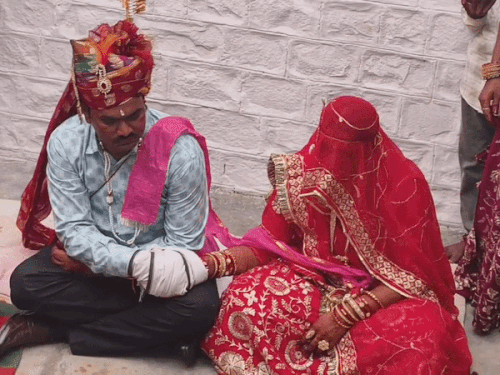
On the appointed day, prison officials witnessed an unusual transformation.
Instead of routine security drills, the premises echoed with wedding chants. Moolaram and Seema exchanged garlands before taking the traditional seven pheras around the sacred fire. Prison officials, police personnel, invited guests and a priest stood witness as sweets were distributed after the ceremony, turning an ordinary prison day into a celebration few expected to see behind correctional walls.
What Happens Next?
The marriage does not alter either convict’s sentence or grant any immediate release. Both remain life convicts and will continue to serve their sentences under the applicable prison rules and judicial orders. Any future parole, remission or release will be decided independently under Rajasthan’s prison regulations and existing legal provisions. Their marriage merely gives legal recognition to their relationship and ensures that their constitutional right to marry is respected despite incarceration.
A Verdict That Could Shape Prison Reform
Beyond the wedding itself, the High Court’s ruling is being viewed as an important affirmation of prisoners constitutional rights. By recognising that incarceration does not erase every civil liberty, the judgment strengthens the reformative philosophy of India’s criminal justice system one that seeks not only to punish offenders but also to prepare them for eventual reintegration into society.
For a few hours, Mandore Open Jail became more than a correctional institution. It became a reminder that while courts may sentence people for crimes, the Constitution can still preserve their humanity. And behind walls built to confine, two people found a chance not to erase their past but to begin writing a different future.
-
-

-

-