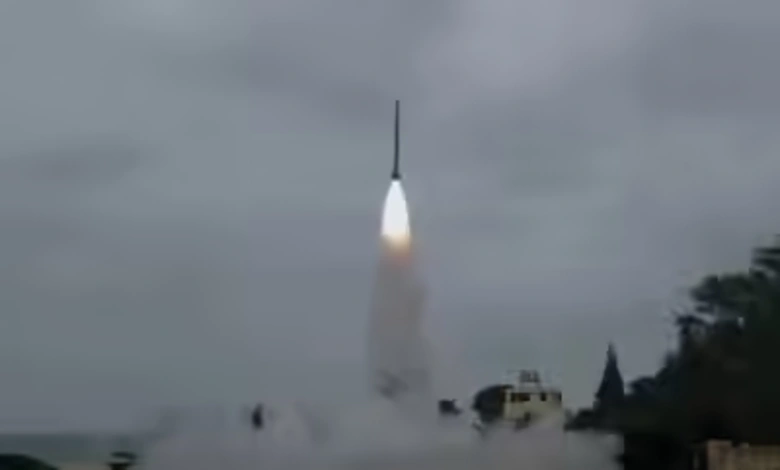
India has taken a significant step forward in bolstering its air defence capabilities with the successful maiden test of the long-range Kusha surface-to-air missile system. Developed by the Defence Research and Development Organisation, Project Kusha is positioned as a domestically produced counterpart to advanced foreign systems like the Russian S-400, which has proven effective in recent operations.
The Kusha system is being designed in three variants: M1 with a 150-kilometre range, M2 extending to 250 kilometres, and M3 reaching up to 350 kilometres. These long-range surface-to-air missiles are intended to serve as the core of a multi-layered defence network, capable of engaging a wide array of aerial threats, including fighter aircraft, stealth platforms, cruise missiles, and unmanned drones.
Recent conflicts around the world have underscored the critical need for comprehensive air defence architectures that can address threats ranging from low-flying drones to high-speed ballistic missiles. In response, India is pursuing an ambitious national initiative known as Sudarshan Chakra, aimed at safeguarding both strategic assets and civilian areas from aerial attacks by 2035. While Project Kusha will strengthen defences against conventional air threats, protection against ballistic missiles will rely on a separate, dedicated ballistic missile defence shield.
This approach draws lessons from global experiences, where even sophisticated systems have shown limitations against coordinated or saturation attacks. The Kusha programme envisions a fully automated and integrated setup that can scale to meet India’s unique geographical demands. Unlike smaller nations defending compact territories, India must secure a vast expanse with dispersed high-value targets, necessitating seamless coordination among sensors, radars, command systems, and various weapon platforms, including potential directed-energy solutions.
India has already laid important groundwork for this broader shield. The country has successfully developed shorter-range air defence systems, tested laser-based directed energy weapons, and validated phases of its indigenous ballistic missile defence programme capable of handling threats with ranges up to 5,000 kilometres. The recent Kusha test highlights progress in interceptor technology for both atmospheric and exo-atmospheric engagements.
Nevertheless, officials recognise that the true test lies in system integration, redundancy, and resilience. Creating an effective national air defence umbrella demands collaboration across industry, research institutions, and the military. As India continues to refine these capabilities, the focus remains on building a robust, adaptable network prepared for evolving threats. The Kusha milestone represents an early but promising phase in this long-term effort to secure the nation’s skies.
-

-

-

-