
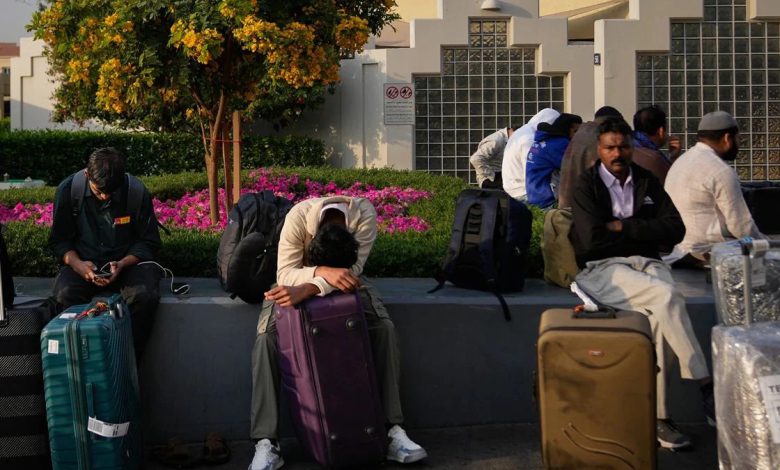
Several expatriates from Kerala are shelling out as much as Dh9,000 roughly ₹2.3 lakh for air tickets to fly home and cast their votes in the Kerala Assembly elections on April 9, 2026. The steep airfares, particularly from the UAE, are expected to dampen Gulf NRI turnout this cycle, according to the Khaleej Times.
The elections will determine whether the ruling Left Democratic Front (LDF), led by 81-year-old Chief Minister Pinarayi Vijayan, can clinch an unprecedented third consecutive term a feat no Kerala government has managed before.
A Voter Returning After a Decade
Roy George, 40, is among those preparing to vote after nearly ten years away. A native of Changanassery in Kottayam district, Roy returned from the United Kingdom a few months ago to care for his ailing mother. He told PTI he is uncertain whether he will be able to vote in future elections, a dilemma he says is common among Kerala families scattered across the world.



His own family mirrors this reality. His parents are Gulf returnees; his siblings are currently working abroad. The family owns rubber plantations in Kerala, yet the gravitational pull of foreign salaries has kept them dispersed.
Roy is candid about what drives migration. “A majority of people don’t move out just for jobs. The salary gap between Kerala and foreign countries is huge, which attracts us to go abroad,” he said.
He also flagged a deeper, generational shift. “Our children are accustomed to life abroad and prefer living in the UK rather than returning to Kerala. Even though we miss our native place, we may be forced to live abroad as our children will settle there,” he added.
Also Read:Centre’s Big Decision: No Address Proof Needed For 5-kg Cylinders Amid Energy Crisis
Migration Takes Centre Stage in Campaign Rhetoric
With tens of thousands of Keralites working abroad and many more in other Indian states migration has become one of the defining issues of the 2026 campaign. All major political fronts have promised to create education and employment opportunities within the state to stem the outflow, though experts are skeptical about how much policy can actually change.
Prime Minister Narendra Modi, addressing an NDA rally, pledged that opportunities would be built in Kerala so youth are not forced to seek work elsewhere. The LDF has promised employment for all graduates completing their studies in the state.
Congress MP Hibi Eden told PTI his party is focused on Keralites who want to stay but feel compelled to leave. “We cannot control brain drain. But there are a large number of people who do not want to leave the state and wish to stay with their families. However, due to unfavourable conditions, they are forced to go out,” he said.
Eden acknowledged the salary ceiling problem. “We have multinational tech companies here offering high salaries. Though lower than abroad, attractive pay packages could encourage people who want to return. More such companies and infrastructure are needed,” he said.
Expert: Focus on Brain Gain, Not Brain Drain
S. Irudaya Rajan, chairman of the International Institute of Migration and Development (IIMD), put the numbers in perspective. As of 2023 estimates, approximately 23–25 lakh people from Kerala are working abroad, with another 10–15 lakh employed in other Indian states.
Rajan pushed back on the narrative that migration signals a failure of Kerala’s economy. “It is estimated that over 35 lakh people from other states are working in Kerala. So, we cannot say there is a lack of opportunities. It is the salary differential that drives people abroad,” he said.
His prescription: shift the policy conversation from stopping emigration to enabling return. “The brain drain cannot be stopped. Instead, authorities should focus on brain gain. There should be schemes to attract people back after their careers abroad, rather than letting them settle permanently outside,” he said.
Rajan also noted a structural demographic consequence already unfolding homes in central and southern Kerala increasingly sit locked or occupied only by elderly parents, as Gulf migrants tend to return later in life while those who move to Europe, the US, or Australia tend to settle permanently.
(With PTI inputs)