
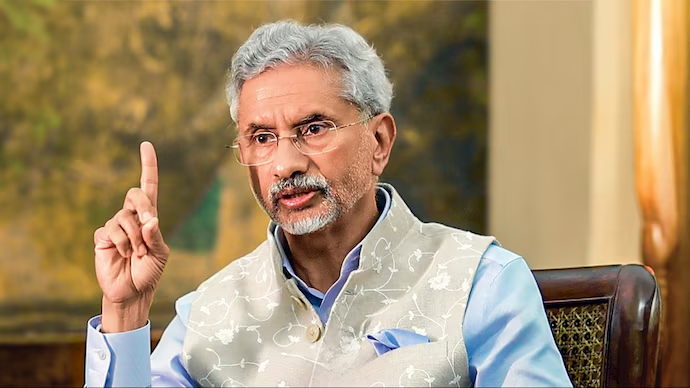
External Affairs Minister S. Jaishankar on Thursday held a telephonic conversation with Iranian Foreign Minister Seyed Abbas Araghchi as the crisis gripping the Middle East continued to intensify.
“Had a telecon with Iranian FM Seyed Abbas Araghchi this afternoon,” Jaishankar posted on X, confirming the high-level diplomatic outreach.
The call came as India formally conveyed its condolences over the death of Iranian Supreme Leader Ayatollah Ali Khamenei, who was killed in a joint US-Israeli airstrike on February 28 — an attack that has since pushed the West Asian region into open conflict. Foreign Secretary Vikram Misri visited the Iranian embassy in New Delhi on Thursday to sign the condolence book on behalf of the Government of India. The Ministry of External Affairs (MEA) released a photograph of Misri’s meeting with Iran’s Ambassador to India, Mohammad Fathali.




India Calls for Dialogue, Flags Economic Stakes
Two days prior, on Tuesday, India had issued a detailed statement calling for an early end to the Iran-US conflict through dialogue and diplomacy. The MEA underscored the stakes for nearly 10 million Indian nationals living and working across the Gulf region.
“In this background, India strongly reiterates its call for dialogue and diplomacy. We raise our voice clearly in favour of an early end to the conflict. Already, many lives have been regrettably lost, and we express our grief in that regard,” the ministry said in its statement, issued three days after an initial, brief response to the rapidly evolving situation.
On the humanitarian front, the statement flagged that some Indian nationals had already lost their lives or gone missing in recent attacks. “Their safety and well-being is of utmost priority. We cannot be impervious to any development that negatively affects them,” it said.
Energy Markets Rattle as Hormuz Closes, Qatar Halts Output
The conflict has sent shockwaves through global energy markets, raising alarm in New Delhi. Iranian forces have effectively closed the Strait of Hormuz, causing oil prices to surge. Natural gas prices have also climbed after QatarEnergy one of the world’s largest exporters halted production following attacks on its facilities.
For India, the world’s second-largest crude oil importer, which sources roughly 85% of its oil needs from abroad, these developments carry significant economic weight. The MEA warned that any “major disruption has serious consequences for the Indian economy,” pointing to the country’s deep reliance on trade and energy supply chains routed through the region.
The ministry also firmly opposed attacks on merchant shipping, noting the prominent role Indian citizens play in the global maritime workforce.