
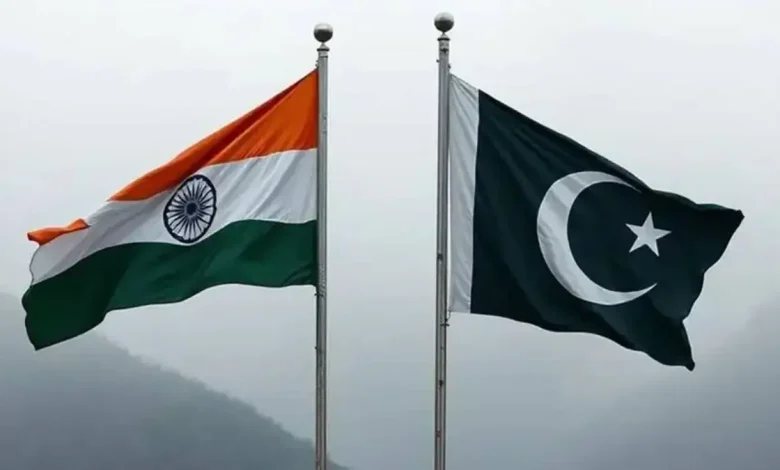
New Delhi: Even as India-Pakistan relations remain officially at a standstill, back-channel diplomacy has not stopped. In February, Indian and Pakistani participants met in Doha for Track 2 talks informal, deniable, and deliberately away from public scrutiny. The meeting was not an isolated event but part of a series of such engagements that have continued despite the deep chill in bilateral ties following the Pahalgam terror attack, which renewed Indian concerns over cross-border terrorism backed by Pakistan.
Track 2 diplomacy between the two neighbours has a long history. At its peak, nearly 20 such dialogues ran simultaneously. The Neemrana Dialogue has been among the most enduring of these, consistently bringing voices from both sides to the table. These exchanges produce no press releases, no public statements, and no official confirmation or denial. Their value lies precisely in that silence: they keep a line open when everything else is shut.
The term “Track 2” was coined in 1981 by American diplomat Joseph Montville to describe informal, non-structured conversations between non-officials typically former diplomats, journalists, academics, business leaders, and civil society figures. The aim is to build trust, test ideas, and create room for understanding without the constraints of political optics. Unlike Track 1 formal government-to-government negotiations such as the Camp David Accords Track 2 offers flexibility and deniability. A hybrid variant, Track 1.5, brings serving officials acting in an unofficial capacity together with outside voices.



This model has repeatedly proved its utility globally when official ties fracture.
After the deadly Galwan Valley clash in 2020, India and China suspended much of their official engagement. Track 2 channels kept communication alive in the interim. The groundwork paid off: Prime Minister Narendra Modi met President Xi Jinping on the sidelines of the SCO summit in Tianjin in 2025. Direct flights resumed in October 2025 after a five-year gap. Cross-border trade and people-to-people contacts have begun a slow return, and Xi may visit India for the BRICS summit later this year.
When Russia’s war on Ukraine broke out in 2022, India engaged through Track 2 and Track 1.5 forums with European, Russian, and Ukrainian interlocutors. Former officials and civil society groups explored humanitarian corridors and de-escalation options while New Delhi publicly maintained its position of strategic autonomy.
The India-Canada relationship offers another instructive case. After relations plummeted following accusations over the killing of Hardeep Singh Nijjar, Track 1.5 diplomacy helped stabilise the situation before formal engagement resumed. Meetings between Prime Minister Modi and Canadian Prime Minister Mark Carney at the G7 in June 2025 and the G20 in November eased tensions. High commissioners were exchanged. Carney’s visit to India in early 2026 produced tangible results: negotiations on a Comprehensive Economic Partnership Agreement (CEPA) targeting bilateral trade of $50 billion by 2030, alongside cooperation in energy, critical minerals, defence, and nuclear matters. Political differences were set aside in favour of strategic and economic imperatives.
Track 2 diplomacy does not substitute for official negotiations. It does not produce treaties or binding commitments. But it keeps conversations alive when governments cannot or will not talk sometimes offering a channel of communication, sometimes planting seeds for future breakthroughs. In a world where formal diplomacy frequently stalls, that quiet space has proven consistently worth preserving.