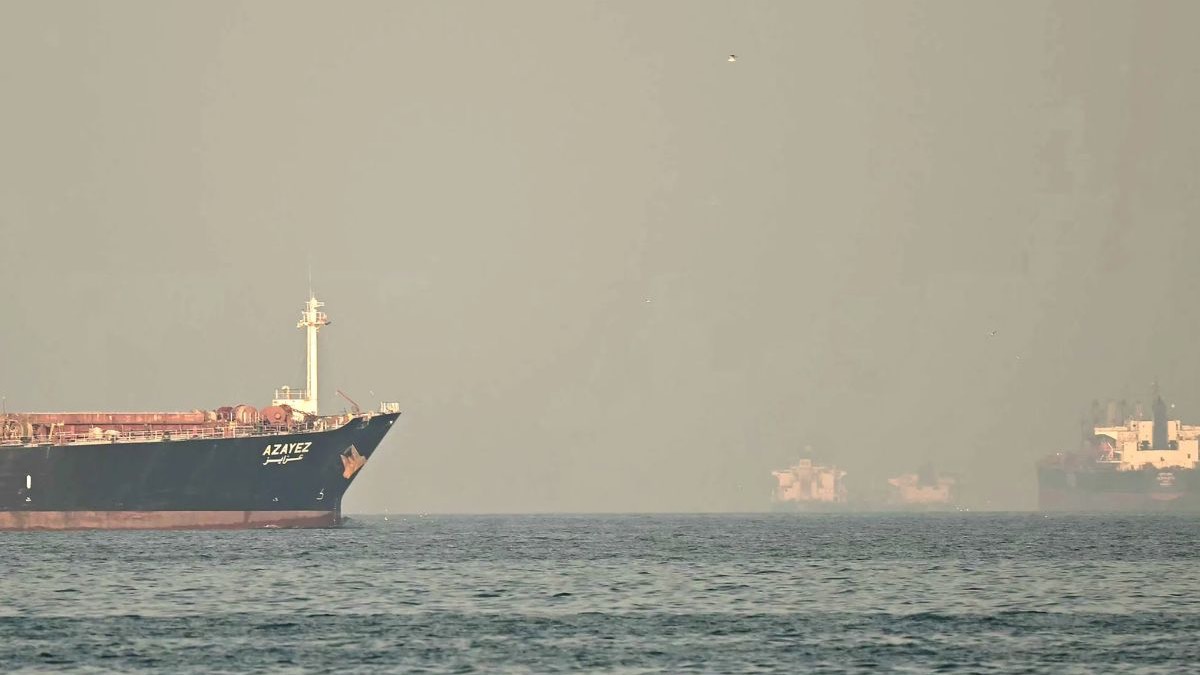
India is in discussions with Iran to ensure the safe transit of more than 20 oil and gas tankers through the strategically critical Strait of Hormuz, according to a report by Bloomberg. The negotiations are being handled by India’s Ministry of Foreign Affairs, the report said.
The narrow maritime route linking the Persian Gulf to the Gulf of Oman has been shut due to the ongoing conflict involving Iran. Typically, nearly one-fifth of the world’s crude oil supply moves through the Strait of Hormuz.
More than 20 tankers carrying liquefied petroleum gas, liquefied natural gas, and crude oil have been stranded in the waterway since military strikes by the United States and Israel on Iran.
Earlier in the day, sources told India Today that Iranian authorities had allowed Indian oil tankers to pass through the crucial shipping lane after S. Jaishankar, India’s External Affairs Minister, spoke with his Iranian counterpart Abbas Araghchi. Later, Randhir Jaiswal, spokesperson for the Ministry of External Affairs, confirmed that talks between the two leaders had taken place but declined to provide further details.
Earlier this week, Jaishankar said on social media that he had spoken with Araghchi and that both sides agreed to remain in contact, though he did not mention the tanker situation.
Also Read: First Oil Tanker Reaches Mumbai Port After Crossing Strait of Hormuz
Meanwhile, Energy Minister Hardeep Singh Puri informed Parliament on Thursday that India is not facing any fuel shortages.
“The world has not faced a moment like this in modern energy history…India’s crude supply position is secure, and the volume secured exceeds what the Hormuz would have delivered. Before the crisis, approximately 45 per cent of India’s crude imports transited through the Strait of Hormuz route. Thanks to the Prime Minister’s outstanding diplomatic outreach and goodwill, India has secured crude volumes that exceed what the disrupted Strait of Hormuz could have delivered in the same period,” he said.
Puri added that oil refineries across the country are operating at high capacity utilisation, with several running above 100 per cent. He also said crude sourcing from countries outside the Hormuz route has increased to nearly 70 per cent of imports, compared with 55 per cent when the conflict began.
“The refineries are operating at high capacity utilisation. In several cases, they are exceeding 100%. There is no shortage of petrol, diesel, kerosene, ATF or fuel oil. The availability of petrol, diesel, aviation turbine fuel, kerosene and fuel oil is fully assured. Retail outlets across the country are stocked and supply chains for these products are functioning normally,” the minister said.
-
-

-

-