
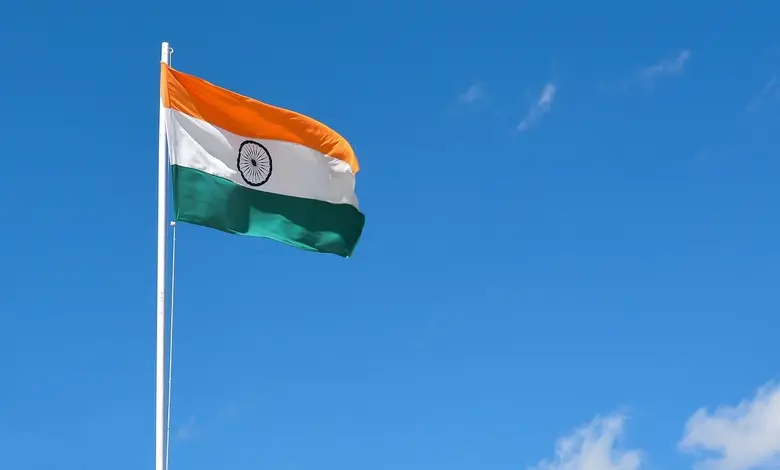
This year’s Independence Day invitation cards are doing something they’ve never done before — helping guests actually sing along. Cards issued by the Defence Ministry for the ceremony at the Red Fort now carry the full lyrics of Vande Mataram, officials said Friday, ahead of the national song being played for the first time during the flag hoisting at the annual celebrations.
The cards print out all six stanzas of the national song, not just the two that have been sung publicly for decades. This year, Vande Mataram will be played before the national anthem at the 80th Independence Day celebrations — a new addition to a ceremony whose broad structure hasn’t changed in years. The invitations go out to the usual mix of top ministers, military officers, bureaucrats, diplomats, students, and special guests recognized for excelling in their fields.
Why the Lyrics Are There At All
It comes down to something fairly simple, according to one of the officials involved. “People know the national anthem by heart, but few can sing the national song. The lyrics have been provided so that people can sing along,” the official said. It’s a practical fix to a real gap — most Indians have Jana Gana Mana memorized from childhood, but the six-stanza version of Vande Mataram, with its more literary, Sanskritised Bengali verses, isn’t something most people have ever had reason to learn by heart.
Beyond the lyrics, this year’s cards also feature an image of Seva Teerth the building housing the Prime Minister’s Office, the National Security Council Secretariat, and the Cabinet Secretariat along with a printed list of fundamental duties. Last year’s cards, by contrast, carried a watermark of Jammu and Kashmir’s Chenab bridge, styled as a symbol of “Naya Bharat.”



The Bigger Push Behind It
This isn’t an isolated gesture. It’s part of a broader campaign that’s been building for months around the 150th anniversary of Vande Mataram. Parliament passed a bill just last week — the Prevention of Insults to National Honour (Amendment) Bill, 2026 putting the national song on the same legal footing as the national anthem for the first time. Under the amended law, obstructing or insulting the national song now carries a criminal penalty of up to three years in prison and a fine, joining the protections that already exist for the national flag, the national anthem, and the Constitution. The Bill passed both Houses during a genuinely stormy stretch of the Monsoon Session, with Opposition members disrupting proceedings over an unrelated but simultaneous controversy — police action against student protesters during a NEET-related march on July 20.
Also Read:Supreme Court Rejects Mahua Moitra’s Plea, Says ‘Freedom Fighters Took Bullets’
The push for all six stanzas isn’t new, either. The Centre made the full rendition mandatory months ago, replacing the decades-old practice dating back to when the two-stanza version was formally adopted as the national song in 1950 — of only singing the opening two.
Republic Day earlier this year was already built entirely around this theme. The 77th Republic Day celebrations ran on a Vande Mataram theme marking the song’s 150th anniversary, and the tableaux from ministries and states across the country followed suit.
The Army, for its part, marked the milestone with band performances staged in 18 locations nationwide including Naihati in West Bengal, the birthplace of Bankim Chandra Chattopadhyay, who composed Vande Mataram in the 1870s.
A Ceremony Still Carrying Last Year’s Weight
Independence Day celebrations last year leaned heavily on the success of Operation Sindoor, coming just three months after Indian forces struck terror and military targets in Pakistan and Pakistan-occupied Kashmir, in response to the April 22 Pahalgam terror attack that killed 26 people. This year’s ceremony, layered with the new Vande Mataram elements, arrives against that same backdrop of a country still processing what that operation meant even as the day’s symbolism shifts toward something more explicitly cultural and historical.