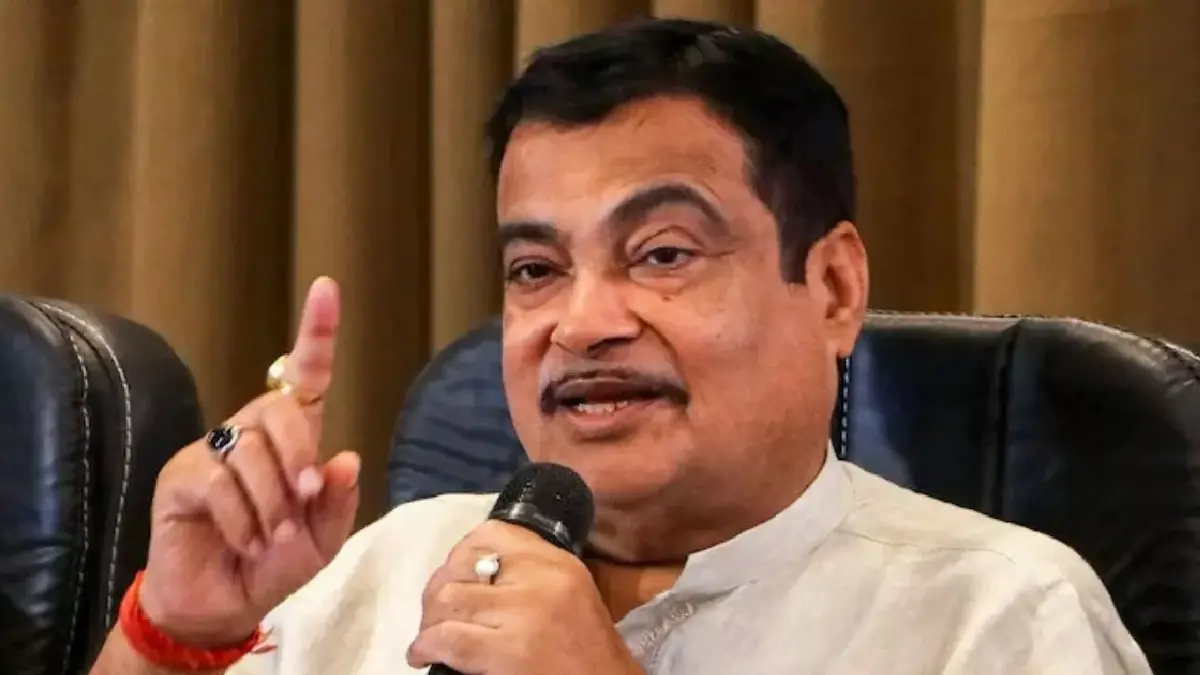
Union Road Transport and Highways Minister Nitin Gadkari on Wednesday pushed back firmly against allegations tied to the Centre’s ethanol-blending programme, rejecting claims of a conflict of interest and insisting there’s no evidence that E20 petrol damages vehicles.
Speaking exclusively to India Today TV, Gadkari brushed aside suggestions that he personally profits from the ethanol policy, pointing out that his family’s sugar business predates the government’s ethanol-blending initiative entirely.
“I gain nothing from the ethanol policy. My share in ethanol production is just 0.07 per cent. With such a small stake, there is no question of any significant financial benefit,” he said.
Pushing back further on claims that he shaped the policy for personal gain, Gadkari said, “The charge that I framed the ethanol policy for my own benefit is completely baseless. A person with a 0.07 per cent stake cannot influence the country’s ethanol policy for personal gain.”
He noted that India currently produces close to 1,500 crore litres of ethanol annually across roughly 550 ethanol-producing units with his own share amounting to just 0.07 per cent of that total.
‘The Policy Is About Alternative Fuels’
Gadkari said his advocacy has never been limited to ethanol alone, framing it instead as part of a broader push for alternative fuels one that cuts India’s reliance on imported crude while boosting farmer incomes. “I don’t talk only about ethanol. I talk about alternative fuels. The use of ethanol will benefit farmers,” he said.
He was also clear that the ethanol-blending programme wasn’t a decision he made alone, describing it instead as the outcome of consultations with the Petroleum Ministry, the Union Cabinet, and scientific experts.
“I didn’t make the decision on ethanol alone. The entire process is conducted after consultation with the Petroleum Ministry, the Cabinet, and scientific research,” he said.
Gadkari Challenges Critics to Produce Evidence
Turning to allegations that E20 fuel harms petrol vehicles, Gadkari challenged critics to come forward with actual documented proof.
“If anyone’s vehicle has been damaged because of ethanol, they should file a complaint with the dealer and also with my ministry. We will investigate and provide relief,” he said.
He pressed the point further: “Can you name even two people personally known to you whose petrol vehicles were damaged because of ethanol?” According to Gadkari, major automakers including Maruti Suzuki, Toyota, Tata Motors, and Mahindra — have not reported a single complaint linking ethanol-blended fuel to vehicle damage.
On a recent case involving a Toyota vehicle, he said investigators found the actual cause was water contamination, not ethanol. “This is not a pilot project. Vehicles undergo testing for four years and run for lakhs of kilometres before approval is granted,” he said.
‘Attempt to Malign Me’
Calling the criticism politically driven, Gadkari alleged there was “an attempt to malign me and discredit the ethanol programme.” He also pointed to countries like the United States, Brazil, Japan, Germany, Thailand, and Sweden, all of which already use ethanol-blended fuel arguing that India’s approach follows globally established practice rather than untested policy.
Gadkari’s comments come as debate continues over how E20 petrol affects fuel efficiency and how well it works with older vehicles built for lower ethanol blends.
The government maintains there’s no proven evidence that E20 damages vehicles, but some motorists and industry voices continue to raise concerns about the fuel’s long-term impact on cars originally designed for different blend ratios.
-

-
-

-