
India imported 4.5 crore fewer barrels of crude oil last year — and Prime Minister Narendra Modi, addressing Parliament as West Asia’s widening conflict squeezes supply lines, pointed to one reason: ethanol.
“In this time of crisis, another preparation of the country is proving very useful,” Modi said during a roughly 20-minute address to the Lok Sabha. “In the last 10-11 years, unprecedented work has been done on ethanol production and blending.”
He noted that a decade ago, India’s ethanol blending capacity stood at just 1 percent. The country has since reached close to 20 percent blending in petrol, a target the government achieved ahead of schedule in 2025. The import saving, he said, was a direct result.




The backdrop to the speech is grim. India sources a large share of its crude from the Gulf, a region thrown into turmoil since the US-Israeli strike on Iran on February 28. Seven Indian Oil Corporation pumps in Rajkot have already run dry, and bulk diesel and petrol supply to stations has been cut by 50 percent.
What E20 is, and why it is contentious
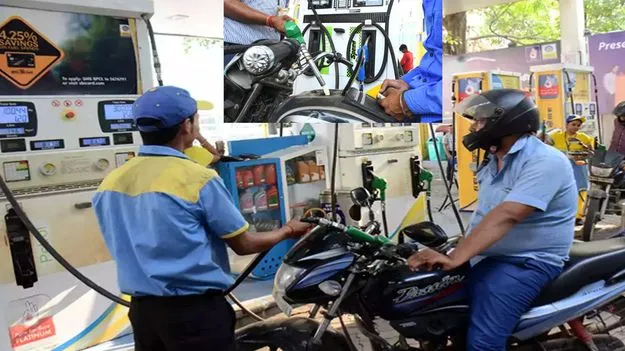
E20 fuel is 80 percent petrol blended with 20 percent ethanol derived largely from sugarcane. The government’s argument has three legs: lower import bills, reduced carbon emissions, and income support for sugarcane farmers. The oil ministry says E20 delivers better acceleration and cuts carbon emissions by roughly 30 percent compared to E10.
But the rollout has not been friction-free. Only vehicles manufactured after April 2023 are officially E20-compatible. Older cars and two-wheelers can suffer engine knocking, corrosion, lower fuel efficiency, and rubber or plastic component degradation when running on the blend, according to multiple reports. Some manufacturers now sell retrofit kits for older engines. Owners have reported mileage drops of around 6 to 8 percent.
There is also a pricing oddity: since ethanol is cheaper than petrol, blended fuel should in principle cost less. In practice, E20 is priced at roughly the same level as regular petrol, sometimes higher when premium-branded variants are counted.
Blends like E5 and E10, which were introduced alongside E20 and seen as safer for older vehicles, have since been quietly removed from most of India’s roughly 90,000 fuel stations.
Industry body: no vehicle failures on record
The Society of Indian Automobile Manufacturers maintains that mileage reduction is real but not a safety issue. “Millions of vehicles are plying on E20 for quite some time now. Not a single vehicle breakdown has been reported or vehicle failure has been reported,” said SIAM Executive Director PK Banerjee at an event in New Delhi in August 2025, as reported by Hindustan Times. Claims of a 50 percent mileage drop are unfounded, he added.
The matter reached the Supreme Court last year. A petitioner cited a 2021 NITI Aayog report raising concerns about pre-2023 vehicles and sought an option of ethanol-free petrol for older cars. Senior Advocate Shadan Farasat clarified the petitioner was not opposed to blending itself, only asking for an alternative. Attorney General R Venkataramani pushed back, calling the petitioner a “name-lender” and suggesting a lobby was driving the opposition. Chief Justice Gavai dismissed the petition.
Road Minister Nitin Gadkari has made a similar accusation at several public events over the past two years. “This is not even a discussion. I don’t know if I should say this, politically — it appears the petroleum lobby is manipulating it,” he has said.
Distillers push for E30, flex-fuel, and diesel blending
The All India Distillers’ Association used the current supply crunch to press for more. In a Sunday letter to Gadkari, AIDA Deputy Director General Bharati Balaji wrote: “Now with the Middle East entangled in a war and oil prices having started increasing, we as an ethanol industry are ready to offer ethanol more than 20 per cent which will reduce proportionally the import of crude.”
The association wants the blending mandate raised progressively to 30 percent. It is also calling for flex-fuel vehicles capable of running on 100 percent ethanol, on the model of Brazil; promotion of ethanol-based cookstoves; and a study of ethanol blending in diesel.
India’s ethanol sector currently has a cumulative production capacity of around 2,000 crore litres, with more than 380 dedicated distilleries operational and a further 33 under construction, PTI reported on Sunday.