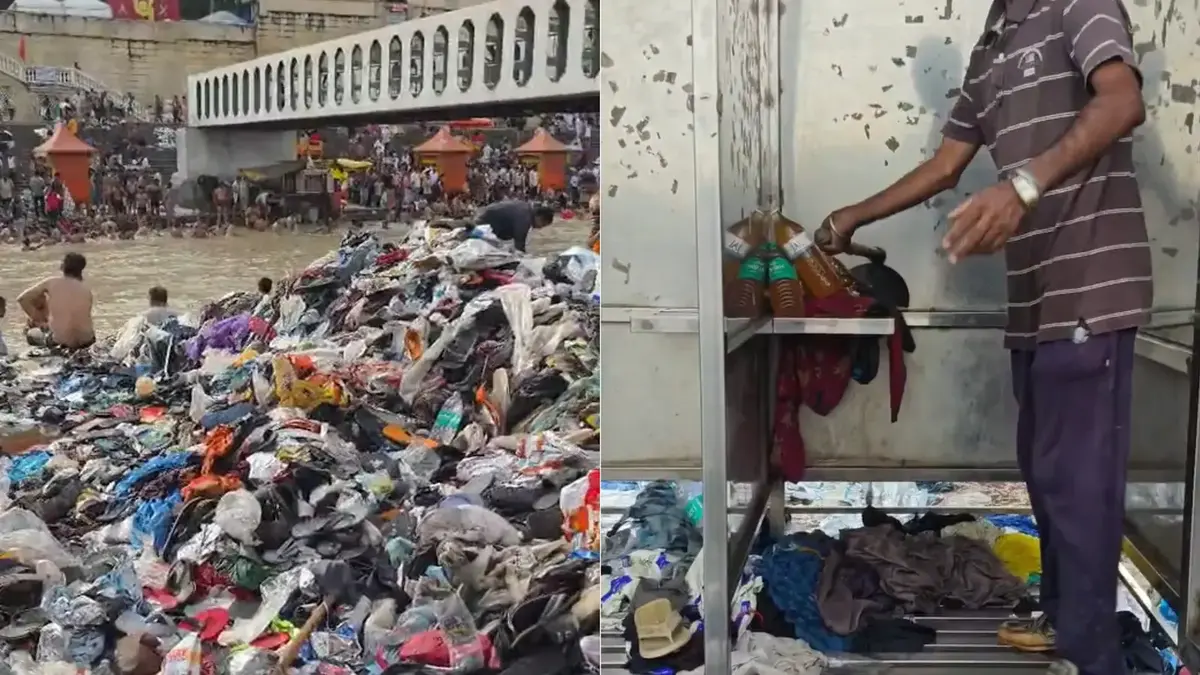
Haridwar: The crowds have gone, the chants have fallen silent, and the Kanwar Yatra is over. But in Haridwar, the cleanup is far from finished. Nearly five crore pilgrims travelled to the city during this year’s Kanwar Yatra, and their departure has left behind a staggering amount of waste. Authorities say at least 7,000 tonnes of garbage has been collected and taken to dumping grounds.
Plastic bottles, discarded clothes, food waste and broken Kanwars have been found across roads, parking areas and the city’s busy ghats.
At Har Ki Pauri, one of Haridwar’s most important religious sites, the aftermath has been particularly unpleasant. Sanitation workers cleaning changing rooms reportedly found bottles containing urine among the discarded waste. Images from the cleanup showed workers removing the bottles with shovels, without visible protective gloves or masks.
For a city built around the Ganga, the scenes have raised an uncomfortable question how can a pilgrimage centred on a sacred river leave so much waste behind?
The problem isn’t limited to Haridwar.
Further uphill, Gangotri also witnessed a large influx of pilgrims. Around 57,000 people reportedly visited the area during Sawan to collect Ganga water. Despite Gangotri being a plastic-free zone, discarded plastic, clothes and other waste were reportedly found after the pilgrimage.
The fragile Himalayan environment makes the problem especially serious. Waste left in these areas can take years to break down and can eventually find its way into streams and rivers.
Back in Haridwar, municipal workers have been working through the night to restore the ghats, roads and parking areas. Municipal Commissioner Nandan Kumar said teams were deployed to tackle the enormous amount of waste left after the pilgrimage.
The turnout itself shows why the challenge is becoming harder every year. Police estimates suggest around 4.8 crore Kanwariyas visited Haridwar this year, up from roughly 4.5 crore in 2025.
For thousands of sanitation workers, the celebration has now turned into days of cleaning.
And that may be the bigger lesson from this year’s Yatra. The Kanwar pilgrimage is one of India’s largest religious gatherings, drawing millions of devotees and generating enormous economic activity. But its growing size also demands equally large scale planning for waste collection, sanitation and environmental protection.
The Ganga may be sacred to millions. The question is whether the responsibility to keep it clean can become just as sacred.
-

-

-

-