Google has joined in the global festivities for Mother’s Day 2026 by unveiling a charming special Doodle on its homepage, paying tribute to mothers everywhere on this day of appreciation and gratitude.
Mother’s Day 2026 falls on Sunday, May 10, and is being observed across many countries including India, the United States, Australia, and Canada, where it traditionally takes place on the second Sunday of May. The occasion gives millions of people the opportunity to express thanks to their mothers for their unwavering love and support.
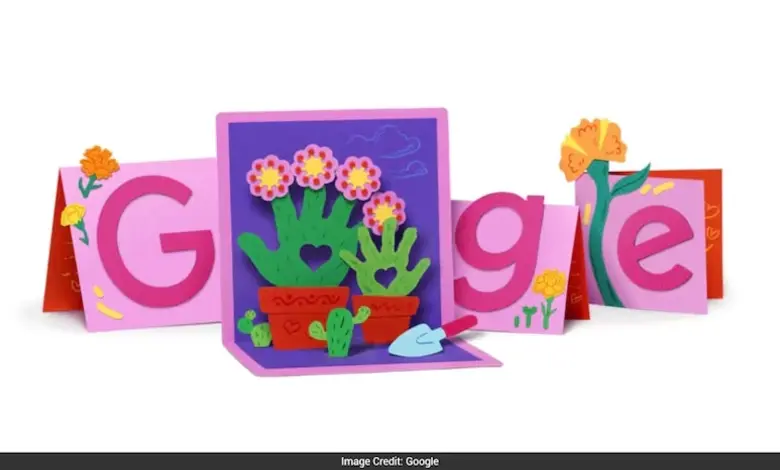
In its Doodle, Google presented a beautifully handcrafted digital card adorned with paper-cut style lettering, a vibrant carnation flower, and a depiction of cacti — symbols representing protection and unconditional love. “This Doodle celebrates Mother’s Day with a handcrafted card featuring paper-cut letters, a carnation, and a cacti – a symbol of protection and unconditional love,” the company noted in its accompanying blog post.
While the date is widely followed, traditions vary by region. In the United Kingdom and parts of Europe, people mark Mothering Sunday on the fourth Sunday of Lent, typically falling in March. Thailand observes the day on August 12, coinciding with the birthday of Queen Sirikit, while Ethiopia holds a multi-day autumn festival known as Antrosht.
ALSO READ : Heartfelt Mother’s Day Gift Ideas to Make Mom Feel Truly Special
The roots of honouring motherhood trace back to ancient civilisations. The Greeks and Romans organised spring festivals dedicated to mother goddesses such as Rhea and Cybele, offering honey-cakes and flowers. In medieval Europe, Mothering Sunday initially involved returning to one’s “mother church” for a special service, later evolving into a family occasion where servants received time off and children presented flowers to their mothers.
The modern Mother’s Day movement gained momentum in the early 20th century, largely due to the efforts of American social activist Anna Jarvis. In 1908, she organised the first official celebration to honour her own mother, who had provided significant community service during the American Civil War. The date was chosen as the second Sunday in May, marking the anniversary of her mother’s passing. The observance was eventually formalised and spread internationally.
Today’s celebrations extend beyond biological mothers to include grandmothers, stepmothers, aunts, foster mothers, and all those who provide maternal care. For many, the day is one of joy and reflection, though it can also evoke feelings of loss or longing for those who have lost or are estranged from their mothers.
-

-

-

-