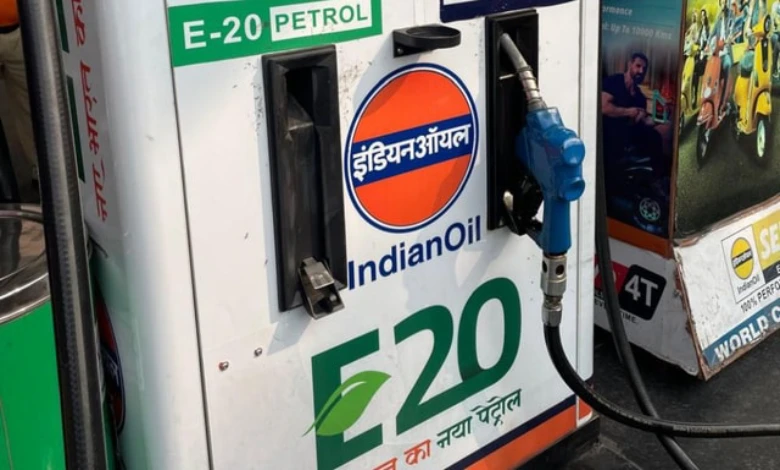
According to a report by The Times of India, a research conducted by the Automotive Research Association of India (ARAI) revealed that using E20 gasoline in cars built for E10 fuel might cause rubber parts in the fuel system, such as hoses, gaskets, seals, and O-rings, to deteriorate. These fuel system components “may need replacement” following extended usage of E20 gasoline, according to the report, which has not yet been made public but has been used as a reference by the government and automakers.
However, none of the cars evaluated had any negative effects on metallic components, according to the analysis. Additionally, it said that emissions from E10-compatible cars using E20 fuel stayed within legal bounds.
The ARAI research also looked at four-wheeler engine durability. One Bharat Stage-IV (BS-IV) engine continued to operate satisfactorily on E20 fuel, according to the study. Nevertheless, “after 265 hours of durability, an issue was observed with the BS-VI turbo charged engine.”
Two manufacturers of passenger cars conducted tests as part of the engine durability evaluation. After 400 hours of testing, no problems were found for one original equipment manufacturer (OEM), and engine performance on E20 gasoline remained satisfactory. But for the second OEM, “thermomechanical failure of exhaust valve was observed in the engine(s) tested cumulatively for 809 hours.”
The thermomechanical failure of the exhaust valve in the second OEM’s engine may have been caused by causes other than E20 gasoline, people familiar with the study told TOI.
The publication was informed by experts in vehicle testing that engine durability tests are often carried out over a period of 2,000 hours, so the test length is a crucial factor to take into account when interpreting the results.
The outcomes were more promising for two-wheelers. Three manufacturers’ engine durability testing revealed no problems, and the research concluded that “performance is acceptable with E20 fuel.” The study also discovered that, although the degree of the rise varied depending on the model, gasoline consumption rose by between 2% to 6% in cars utilizing E20 as opposed to E10.
Also Read – Maharashtra To Overhaul Bike Taxi Regulations, Domicile Must For Drivers From Aug 1
-

-

-

-