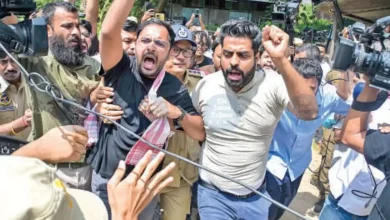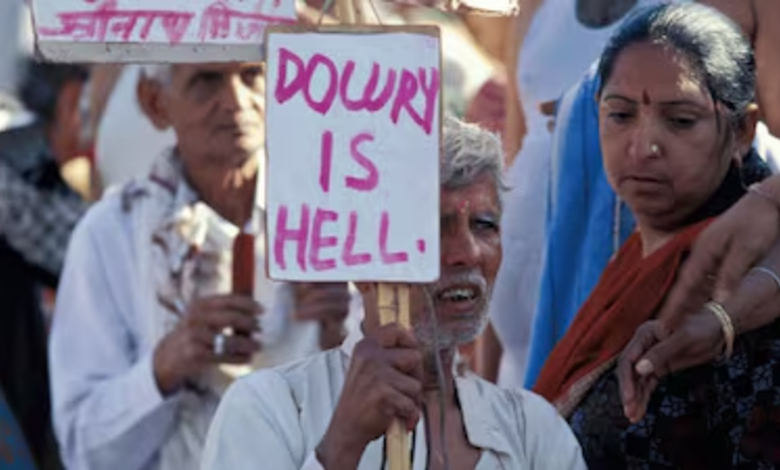
The recent tragic deaths of Twisha Sharma in Bhopal and Deepika Nagar in Greater Noida have once again shone a light on the horrific practice of dowry in India. Both women allegedly passed away within only a few months of marriage, with their families accusing the in-laws of severe dowry harassment.
According to shocking data released by the National Crime Records Bureau (NCRB) on May 6, the nation recorded 5,737 dowry deaths in 2024 signaling that roughly 16 women lost their lives every day due to dowry torment and domestic violence. The NCRB report highlights a worrying spike in dowry-related cases across India. Notably, the capital Delhi recorded the highest number of dowry deaths among metropolitan cities for the fifth successive year. While Delhi’s 109 recorded deaths in 2024 show marginal progress compared to 114 in 2023 and 136 in 2021, the national capital still tops the charts compared to other major cities.
Geographically, northern cities contributed heavily to these statistics, while southern cities including Chennai and Kochi reported zero dowry deaths in 2024, showing striking progress despite being part of the same socio-political landscape.
Meanwhile, states like Uttar Pradesh, Bihar, and Karnataka continue to lead this regressive practice, collectively accounting for more than 6,000 dowry deaths in 2023. What legally defines a dowry death? According to Section 80 of the Bharatiya Nyaya Sanhita (formerly Section 304B of the IPC), a dowry death is recognized when a woman dies under unnatural circumstances within seven years of marriage, and there is evidence of cruelty or harassment related to dowry demands shortly before her death.
These recent tragedies have raised urgent questions regarding the efficacy of anti-dowry laws. Twisha Sharma, a 33-year-old Noida resident who married Bhopal-based Samarth Singh in December 2025, was found hanging at her husband’s house on May 12. Her devastated family has accused her in-laws of her death. Shortly after Twisha’s case, the death of Deepika Nagar in Greater Noida further agitated the public. The young woman allegedly died after falling from the terrace of her in-laws’ residence; her husband and father-in-law have since been detained by the police for investigation. Even more shocking was an incident in January 2026 involving the alleged murder of a female SWAT commando by her husband over dowry, proving that even women in high-security profiles are not spared.
As India’s dowry death toll rises, it exposes a practice deeply rooted across generations. While these numbers reflect the fatalities, they raise a haunting question: what about the countless women who are still alive, enduring this silent torment without ever reporting it to the authorities? Their invisible pain still desperately needs to be addressed.
Also Read: US Approves $428 Million Apache Helicopter And M777 Howitzer Support Deals For India
-
-

-

-