
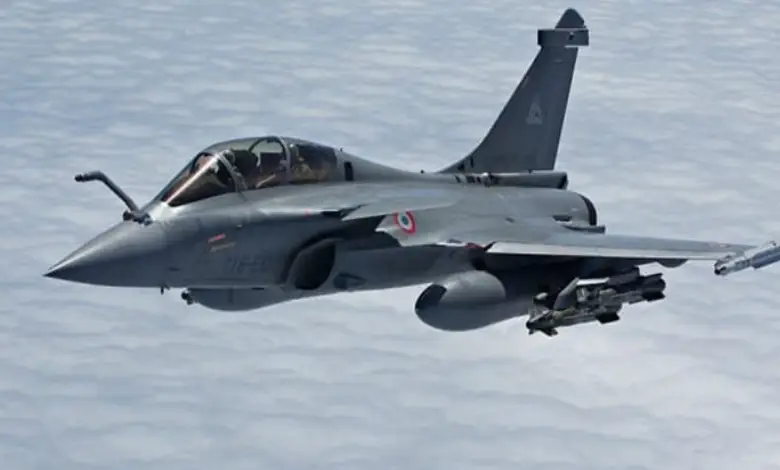
The Defence Acquisition Council (DAC) on Thursday (February 12) gave its approval to a significant procurement plan for acquiring 114 Rafale fighter aircraft from France for the Indian Air Force (IAF) under an inter-governmental agreement. Out of the total number, 90 jets are slated for production within India, as per reports. This approval has come just days before French President Emmanuel Macron’s scheduled official visit to India from February 17 to 19.
The DAC meeting, presided over by Defence Minister Rajnath Singh, also greenlit the procurement of six more P-8I maritime reconnaissance and anti-submarine warfare aircraft for the Indian Navy from the United States. In a formal announcement, the Ministry of Defence (MoD) stated that the council provided Acceptance of Necessity (AoN) for several defence initiatives totalling around Rs 3.60 lakh crore. Apart from the Rafale fighters and P-8I aircraft, clearances were also issued for combat missile systems and Air-Ship Based High Altitude Pseudo Satellite (AS-HAPS) platforms.
As per the planned framework, 18 Rafale aircraft will be supplied directly by Dassault Aviation in flyaway condition, whereas the balance 96 will be built in India. Reports indicate that the indigenous content requirement, which was initially proposed at 30 per cent, has now been raised to close to 50 per cent after commercial negotiations.
Also Read: India-US Trade Deal Factsheet Revisions Reflect Mutual Understanding, MEA Clarifies




India will also maintain full freedom to incorporate domestically developed weapons and systems into the aircraft. The proposal now requires final approval from the Cabinet Committee on Security (CCS), headed by Prime Minister Narendra Modi, before the agreement is officially sealed. At present, the IAF flies 36 Rafale fighter jets. Furthermore, the Indian Navy has placed orders for 26 Rafale-M variants for use on aircraft carriers. Upon completion of the new acquisition, India’s overall Rafale fleet is projected to stand at 176 aircraft, enhancing operational efficiency while cutting down on training and logistical costs.