
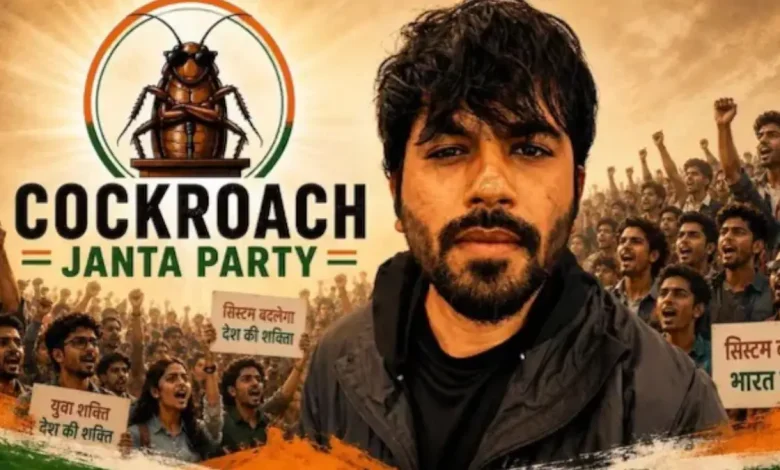
NEW DELHI: Abhijeet Dipke, the founder of the Cockroach Janta Party, has firmly dismissed allegations by BJP leaders that a large portion of the group’s social media following originates from Pakistan. The internet-driven movement, which has gained rapid popularity among young Indians through memes and sharp commentary on issues like unemployment, education policies, and alleged examination paper leaks, has sparked a fresh political row.
In response to the charges, Dipke posted a screenshot of the account’s audience demographics on X (formerly Twitter). He stated that the data, which he had previously shared with the media before the account faced hacking, clearly shows that more than 94% of the audience is from India. Dipke questioned the narrative pushed by senior BJP figures, asking why a Union minister would label Indian youth as Pakistani.
The controversy escalated after Union Minister Kiren Rijiju posted a strong criticism of the Cockroach Janta Party, expressing pity for those seeking followers from Pakistan and what he described as the “George Soros gang.” Separately, BJP leader and Union Minister Sukanta Majumdar claimed that 49% of the party’s social media followers were from Pakistan, with only 9% from India.
ALSO READ : Cockroach Janta Party Founder Says His Instagram Account Was Hacked

Kerala BJP president Rajeev Chandrasekhar went further, describing the campaign as a “classic cross-border influence operation” designed to destabilise India and target Prime Minister Narendra Modi. He highlighted the risks posed by bots, AI, and coordinated influence efforts in the social media era, suggesting that certain opposition elements were amplifying the content. Chandrasekhar also noted that India’s progress under Modi has provoked resentment from foreign vested interests, yet he affirmed the government’s resolve to build a developed nation despite such challenges.
The Cockroach Janta Party trend emerged following public reaction to reported remarks by Chief Justice of India Surya Kant during a court hearing. Dipke has claimed the movement has since encountered coordinated restrictions across multiple social media platforms.
This exchange underscores the growing intersection of online activism, youth discontent, and political counter-narratives in India’s digital landscape