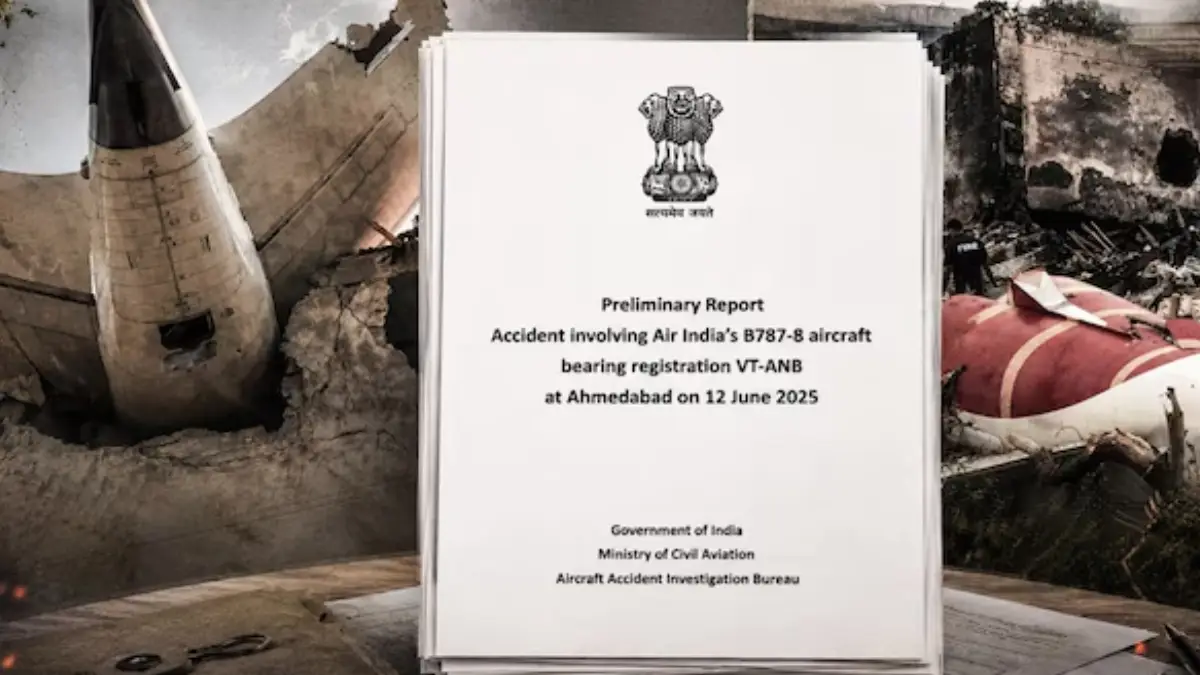
New Delhi : Three seconds after Air India Flight 171 lifted off from Ahmedabad on June 12, 2025, two fuel switches in its cockpit moved to the cut-off position, starving both engines of fuel. Half a minute later, the London-bound Boeing 787 Dreamliner crashed into a medical hostel complex, killing 260 people.
Of the 230 passengers and 12 crew members, all but one (British national Vishwashkumar Ramesh, sitting on the now-famous seat 11A next to an emergency exit) died. Another 19 people, at the medical hostel complex into which Air India 171 crashed, were killed on the ground. The crash resulted in an inferno reaching temperatures of up to 1,000 degrees Celsius and left many bodies so badly mutilated that identification took weeks of painstaking DNA matching.
The other is technical: A modern Boeing 787 Dreamliner, built with multiple backup systems, suffered a catastrophic mechanical or electrical failure or failures that starved both engines of fuel at the worst possible moment. Neither theory has been established. But both have been intensely argued over in media reports and social media. One theory can destroy the reputation of a dead pilot who cannot defend himself and raise troubling questions for the aviator community at large.
That is the high-pressure backdrop against which the first anniversary of the crash arrives on June 12. To understand why the anniversary matters, it helps to know how air crash investigations are supposed to work. Under protocols laid out by the International Civil Aviation Organization:
The country where the crash happens leads the investigation. Other countries may take part and comment on the final findings if the aircraft was designed, manufactured, registered or operated there, or if their citizens were killed or seriously injured.
Read Also : Rejected But Defiant: Meenakshi Natarajan Turns Rajya Sabha Setback Into Political Fight
-

-

-

-