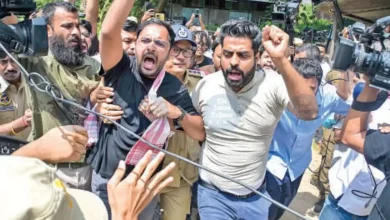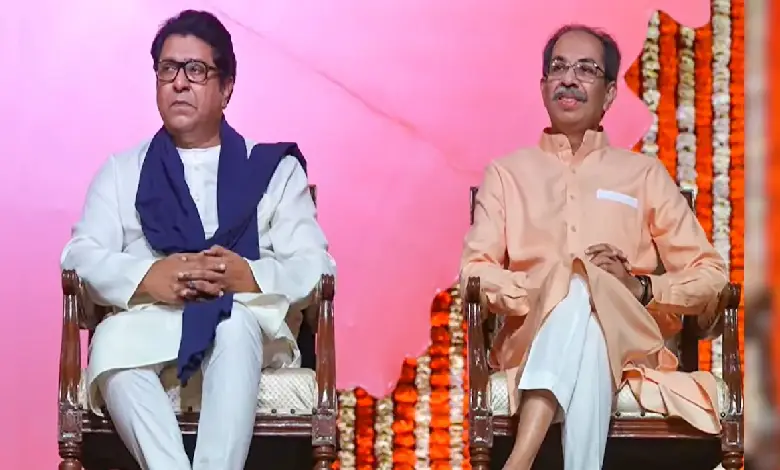
Shiv Sena turned 60 on June 19, 2026, marking six decades since Bal Thackeray founded the party — and the anniversary arrives, fittingly, amid fresh talk of yet another split. Reports indicate six of Shiv Sena (UBT) chief Uddhav Thackeray’s nine Lok Sabha MPs may break away to align with the rival Eknath Shinde-led faction, just four years after Shinde’s 2022 revolt cost Uddhav both the chief minister’s chair and, eventually, the party’s name and symbol.
It’s a fitting, if uncomfortable, milestone for an organisation whose six-decade history has been shaped as much by internal rebellion as by electoral success.
From a Mumbai movement to a state power
Thackeray launched Shiv Sena on June 19, 1966. The party’s first electoral foothold came a year later with civic poll wins in Thane, and it entered Mumbai’s municipal politics in 1968. By 1985, it had captured the Brihanmumbai Municipal Corporation (BMC) for the first time, a stronghold it would hold for decades. Its statewide ambitions took shape in 1990, when an alliance with the BJP delivered 52 Assembly seats and made Shiv Sena the principal opposition in Maharashtra. Five years later, in 1995, the Sena-BJP combine formed its first state government, with Manohar Joshi as chief minister.
The party’s first major fracture came in 1991, when senior leader Chhagan Bhujbal walked out with 18 MLAs to join the Congress a split that foreshadowed the pattern of senior-leader defections that would recur throughout Shiv Sena’s history.
A generational handover, and a nephew’s exit
Bal Thackeray began preparing for succession in January 2003, naming son Uddhav as the party’s executive president. Two years later, in 2005, nephew Raj Thackeray left the party over internal differences and went on to found the Maharashtra Navnirman Sena (MNS). When Bal Thackeray died of cardiac arrest in November 2012 at age 86, Uddhav formally took over as party president.
Power, rupture, and a fight over the party’s identity
Shiv Sena contested the 2014 Maharashtra Assembly elections on its own and won 63 seats, eventually rejoining the BJP-led government months later despite early friction. The bigger break came after the 2019 Assembly polls: Shiv Sena split from the BJP in a dispute over the chief minister’s post, and Uddhav Thackeray instead allied with the Congress and NCP to form the Maha Vikas Aghadi (MVA) government, becoming chief minister himself.
That government didn’t survive Shiv Sena’s next, far larger rupture. In June 2022, Eknath Shinde led what became the biggest rebellion in the party’s history, toppling the MVA government; Shinde then became chief minister under a BJP-backed Mahayuti alliance. The Election Commission settled the question of identity in February 2023, awarding the Shiv Sena name and its bow-and-arrow symbol to Shinde’s faction. Uddhav’s side was reconstituted as Shiv Sena (UBT) and given the flaming torch as its symbol. The Thackeray faction’s last major institutional stronghold fell in February 2026, when it lost control of the BMC — ending its decades-old grip on Mumbai’s civic administration.
A second split, four years on
That brings the party to its present predicament. As of June 2026, six of Shiv Sena (UBT)’s nine Lok Sabha MPs are reported to be seeking to form a separate group, with speculation building that they may eventually join the Shinde camp. Should that materialise, it would mark another fracture in a party whose 60-year arc from Bal Thackeray’s founding vision to Uddhav’s leadership and the battles that followed has come to be defined nearly as much by who has left it as by what it has built.
-
-

-
-