
[By Devansh Desai Mumbai Samachar Desk]
School Enrolment vs Early Exit
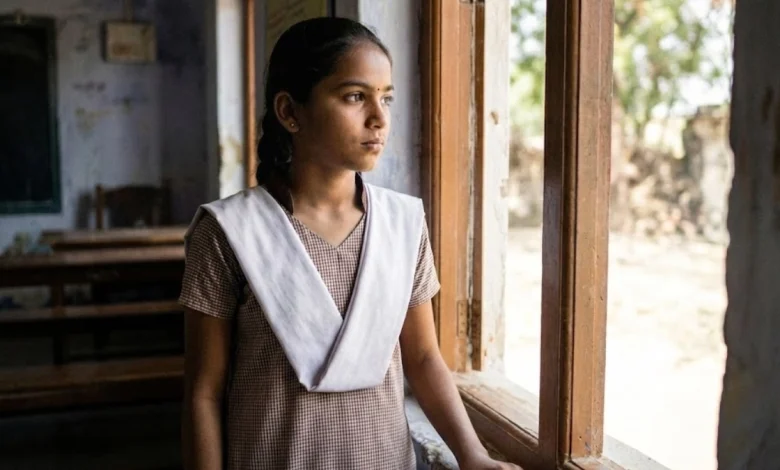
In Gujarat, government drives such as school enrolment festivals ensure that almost every child is formally admitted to school. Yet a significant number of these students drop out before completing Class 12. This reality has emerged from the Union government’s recent written reply in the Rajya Sabha, which includes official state-wise data on school dropouts.
According to this reply, Gujarat tops the list among all Indian states when it comes to the number of children leaving school. In 2024–25, 54,541 students in Gujarat dropped out. In 2025–26, the situation worsened sharply, with 2,40,809 students moving out of the school system.
Government Data and Expert Doubts
The Gujarat government, in its own disclosure, has stated that 2,40,486 students dropped out in 2024–25. Officials claim that through individual follow-up and special efforts, 2,30,196 of these children were brought back into school. However, education experts argue that the actual dropout numbers are higher than what the government acknowledges.

They point to several structural issues that push children out of school: closure of government schools, long distances between home and school, teachers being diverted to non-teaching duties, and poor or poorly maintained infrastructure. These factors, they say, combine to make schooling difficult and unattractive for many children.
Why is Gujarat Leading in Dropout Rate?
Congress MP Renuka Chowdhury asked in the Rajya Sabha about the total number of school-going girls dropping out across India and the reasons behind it. Responding to her question, Union Minister for Women and Child Development Savitri Thakur listed the key reasons identified by states and Union Territories: migration, poor socio-economic status of families, household responsibilities placed on children and child labour.
In the 2025–26 data for “out of school” children, Gujarat alone accounted for 2,40,809 students, the highest figure among all states and Union Territories. Of these, 1,05,020 are girls. In 2024–25, 54,541 students were listed as out of school, but what stands out is that in that year only one adolescent girl from Gujarat is shown as out of school in the official figures.
Allegations of Discrepancies in Figures
Education activist Sukhdev Patel, who has worked in the sector for years, claims there are clear inconsistencies in the official numbers. He alleges that the real number of children who leave school is much higher than the government’s data suggests.
Patel argues that, going by his calculations, at least 10 lakh students in Gujarat drop out every year. He points out that in the Class 10 board exams alone, over three lakh students fail annually, and only about 10% of those who fail return to study. Among those who pass, some do not move on to Class 11 at all. Other education experts also question how government-school quality is deteriorating while private schooling is becoming increasingly expensive.
Structural Problems in Schooling
Speaking to Media Agencies, Mujahid Nafees, Gujarat convener of the Right to Education (RTE) Forum, said government schools are in decline while private schools are on the rise. Teachers in government schools are often burdened with administrative and non-academic tasks, he said, arguing that separate staff should be appointed for such work so teachers can focus on teaching.
In many parts of rural Gujarat, secondary schools exist only in larger villages. As a result, the dropout rate rises sharply when students move from upper primary to secondary and higher secondary levels. Patel notes that the government has made Class 8 teachers responsible for ensuring that all students who pass Class 8 get admission to the nearest secondary school. Yet many children, especially where there is no school in the village, avoid travelling long distances and quietly discontinue their education.
Patel also mentions cases where students are enrolled on paper but never actually attend classes. Simply recording admission is not enough, he says; ensuring regular attendance and learning is equally crucial.
According to Patel, surveys on out-of-school children are conducted every year under the Sarva Shiksha Abhiyan framework. However, he insists that there are major gaps between state and central government data, raising questions about the reliability of official claims and the true impact of government interventions.
Gender Bias, Toilets and Girls’ Safety
In 2025–26, Gujarat reported 2,40,809 children as out of school, of whom 1,05,020 are girls. Explaining why girls are dropping out in such large numbers, Sukhdev Patel says many adolescent girls are pulled out of school early due to pressure to marry, or are not allowed to continue their studies after marriage.
He adds that in some conservative families, parents fear that an educated daughter-in-law might assert her rights in her marital home, so they prefer to stop their daughters’ education. As a result, girls are either never sent to school beyond a certain level or are withdrawn as soon as they reach adolescence.
Nafees points to the lack of basic infrastructure in schools as another factor. In many schools, toilets do not have running water. As girls grow older, the absence of water and privacy in toilets often puts them in humiliating situations, discouraging them from attending school regularly. Activist Nurjahan Niswan told Media Agencies that the shortage of classrooms in many schools is also contributing to higher dropout rates.
According to Niswan, government schools are shutting down and the quality of education is deteriorating in those that remain. Parents, therefore, increasingly prefer private schools for their children. But with fees rising, families often prioritise sons’ education over daughters’. In such circumstances, many parents stop their daughters’ schooling first when financial pressures mount.
Government Schemes and Their Limits
Despite criticism, many education workers acknowledge that the government is making efforts. Discussing Gujarat government schemes, Patel says initiatives do exist but their effectiveness is not systematically studied. He cites the “Namo Lakshmi Yojana”, under which girl students in Classes 9 and 10 receive ₹10,000 a year, and those in Classes 11 and 12 get ₹15,000 annually, credited to their mother’s bank account.
In principle, such financial support should encourage parents to keep daughters in school. Yet, Patel points out, dropout rates among girls remain high in Gujarat even after the launch of this “good scheme”. He argues that the government should compile a detailed dropout report, analyse the reasons thoroughly and work towards concrete solutions, and that all political parties whether BJP, Congress or others should refrain from turning this issue into a political battleground.
Gujarat Government’s Response
Following the data presented in Parliament, Gujarat’s Information Department issued a press note explaining its position. The note states that every year, under the Samagra Shiksha framework, a survey is carried out to identify out-of-school and dropout children. Once identified, these children are tracked individually, given special training and then re-enrolled in schools.
According to the state government, 2,40,486 such children were identified in 2024–25, and 2,30,196 of them were brought back into the school system. Officials argue that these figures show the seriousness of the government’s efforts to reduce dropouts.