
Gujarat Returns To India’s Tiger Map After 30+ Years As NTCA Confirms ‘Tiger-Present’ Status Following Ratanmahal Sightings
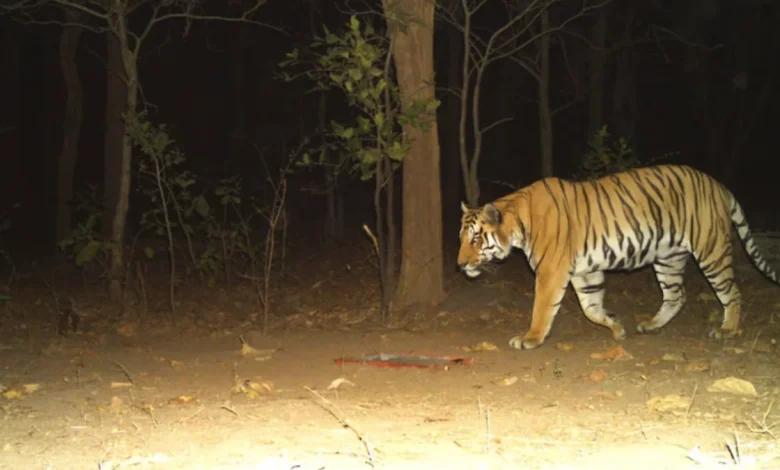
Ahmedabad: Over three decades after disappearing from India’s tiger map, Gujarat has received official recognition as a tiger-presence state for the 2026 census. This development comes after verified observations of the big cat in Dahod’s Ratanmahal sanctuary. An official camera-trap survey will now take place along the Gujarat-Madhya Pradesh boundary.
The All-India Tiger Estimation (AITE) 2026, among the country’s most comprehensive wildlife assessments, kicked off in Indore last week. Census officials revealed that the National Tiger Conservation Authority (NTCA) has issued directives requiring tiger protection protocols in Ratanmahal sanctuary, currently inhabited by a tiger approaching four years of age. The feline started roaming the Ratanmahal-Madhya Pradesh boundary area in mid-February and has remained in the region since, leading state forest authorities to track its activity carefully and introduce protective measures for its continued existence. Photographic documentation has led NTCA to restore Gujarat’s position on the national tiger map and incorporate it into the AITE.
“The nationwide tiger survey has started, and our personnel will shortly travel to Gujarat to record this tiger. As it remains untagged, we will tag it during the census and provide training to state forest staff on the stripe software platform. This will allow them to track the tiger’s journey not only across Gujarat but nationwide,” stated an official connected with the AITE.
Gujarat’s previous census occurred in 1989, when authorities documented paw prints but failed to observe any tigers directly. The state was omitted from the 1992 census, leading to its exclusion from the tiger-presence states list.




Following that period, there was a single confirmed observation in 2019, though that tiger lived only 15 days. “The four-year-old tiger has established consistent presence in Ratanmahal sanctuary for approximately 10 months. We possess continuous photographic and CCTV records demonstrating prolonged residency, rather than temporary movement through the territory. This extended duration makes Gujarat’s restoration as a tiger-presence state both reasonable and essential,” noted an NTCA official.
Read More: Royal Bengal Tiger Returns to Gujarat After 32 years, Settles in Dahod Sanctuary
Authorities will also examine Madhya Pradesh’s Alirajpur, regularly visited by the Ratanmahal tiger, to establish whether a female tiger exists there. An NTCA official acknowledged receiving Gujarat’s appeal for support in declaring Ratanmahal a tiger reserve. “Prior to considering a tigress translocation, the NTCA will comprehensively evaluate the region’s ungulate numbers to confirm sufficient prey availability,” he stated.