Ahmedabad: The Gujarat Legislative Assembly on Tuesday passed the Uniform Civil Code (UCC) bill by a majority, making Gujarat the second state in India after Uttarakhand to legislate a UCC.
The ruling BJP government has described it as a historic step toward equality and justice, while the opposition has dismissed it as electoral strategy.
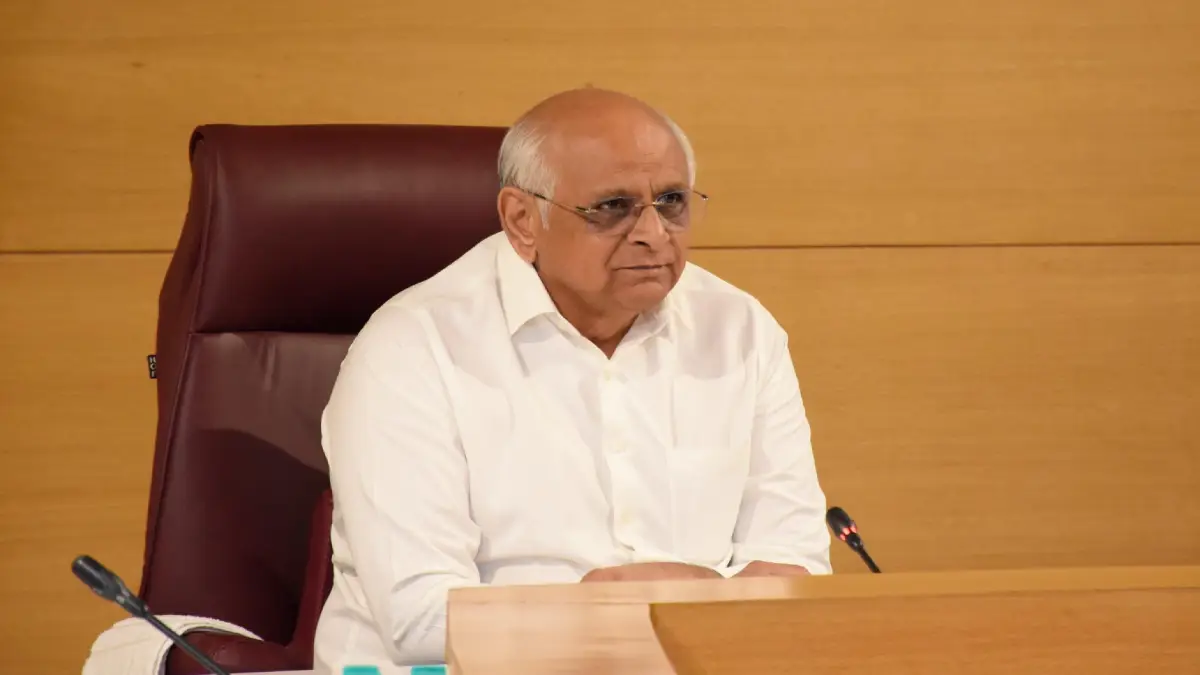
Chief Minister Bhupendra Patel introduced the bill in the assembly. A committee headed by retired judge Ranjana Desai was formed to draft it. Before the bill was tabled, Deputy Chief Minister Harsh Sanghvi called it historic, saying, “In 1947 we got independence, but laws across the country remained community-based, caste-based, and religion-based. Women and daughters suffered the most because of this. UCC will bring uniform rules for marriage and civil matters, and daughters from every community will benefit.”
After nearly seven and a half hours of debate, the bill was passed by a majority vote. The main opposition, Congress, walked out of the house during the voting.
Who Is Exempt from the UCC?
The bill explicitly states that once enacted, it will not apply to members of Scheduled Tribes listed under Articles 342 and 366(25) of the Indian Constitution — covering over 700 distinct tribal communities across the country. It will also not apply to individuals or groups whose traditional rights are protected under Part 21 of the Constitution.
Key Provisions of the Bill
The bill applies to all castes and religions except the exempted communities. It covers marriage and divorce, inheritance, and live-in relationships. Key provisions include:
- Mandatory registration of marriages across all religions and traditions; failure to register attracts a fine of up to ₹10,000
- Forced or coerced marriages punishable by up to seven years in prison; multiple marriages also punishable by over seven years
- Uniform divorce rules for all religions and communities; out-of-court divorces will be invalid and punishable by up to three years in prison
- Equal inheritance rights for sons and daughters
- Muslim daughters to receive inheritance equal to sons
- Practices like nikah halala to be permanently abolished
- Cousin marriages, where permitted by minority community tradition, will continue to be recognised
- Mandatory registration of live-in relationships; non-registration after one month is punishable by up to three months in prison and a fine of up to ₹10,000
- Children born of live-in relationships to be considered legally legitimate
- Live-in relationships entered through coercion or fraud punishable by up to five years in prison
- Live-in relationships involving minors to be prosecuted under the POCSO Act
Live-In Relationship Rules in Detail
- Couples living together within Gujarat regardless of whether they are Gujarat residents must submit a declaration to the Registrar
- Gujarat-born individuals living outside the state must submit the declaration where they currently reside
- Upon receiving the declaration, the Registrar may summon and examine individuals beyond the couple if required
- A woman abandoned by her live-in partner is entitled to claim maintenance and can approach a court; jurisdiction lies where they last cohabited
Grounds Accepted for Divorce
Under the UCC, divorce will only be granted on the following grounds:
- Voluntary sexual intercourse with a person other than the spouse after marriage
- Cruelty toward the petitioner after marriage
- Desertion of the petitioner for a continuous period of not less than two years immediately preceding the petition
- Conversion to another religion by the petitioner
- Incurable mental illness of the petitioner
What the Ruling Party and Opposition Are Saying
Chief Minister Bhupendra Patel said the UCC will establish “a uniform legal framework for marriage, divorce, inheritance, and adoption for all religions and communities,” ensuring that “women of every religion and caste receive equal rights, strengthening their dignity and safety.”
Gujarat Congress president Amit Chavda opposed the bill, saying it was rushed through without being referred to a committee first. He alleged that the UCC committee’s report was never placed before the house, that MLAs had no opportunity to deliberate on it, and that certain communities being excluded undermines the principle of equality. He also questioned why the bill was introduced in the Gujarat assembly when Parliament holds the authority to legislate such laws for the entire country.
The Aam Aadmi Party also opposed the bill. AAP MLA Chaitar Vasava alleged that the BJP was acting under pressure from the RSS and that tribal communities were excluded only for electoral reasons, with the possibility of being included later. He said the bill was an attempt to prove nationalist credentials by targeting minority communities, and questioned whether the UCC would genuinely bring social harmony or strengthen national unity.
-
-

-

-