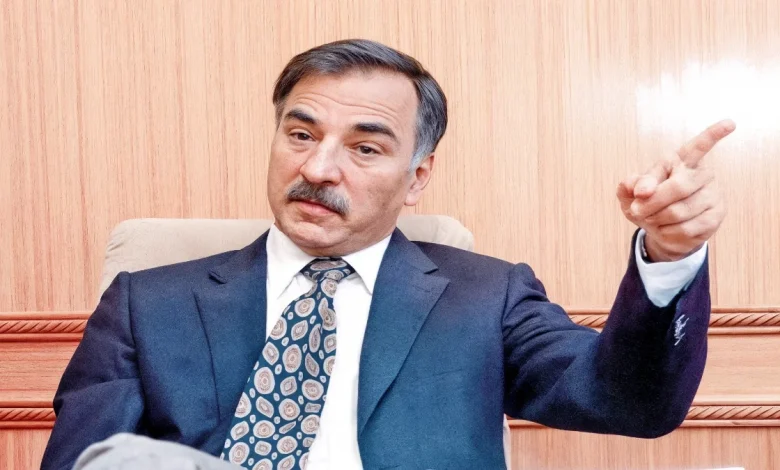
Retired IAS officer Pradeep Sharma once known for intensifying political troubles for then–Gujarat Chief Minister Narendra Modi has been sentenced to five years in prison in a money-laundering case
According to a PTI report, a special court in Ahmedabad on December 6 handed Sharma a five-year jail term under the Prevention of Money Laundering Act (PMLA). The court also imposed a fine of ₹50,000.
Investigators alleged that during his tenure in Kutch, Sharma secured financial benefits for his wife from a Mumbai-based business group with significant commercial interests in the district, causing losses to the state exchequer.
Sharma had earlier accused Modi of ordering the surveillance of a young woman in Gujarat, filing an affidavit on the issue before the Supreme Court. The controversy had also drawn in then–Minister of State for Home Amit Shah.


Sharma’s brother, Kuldeep Sharma, was an IPS officer in Gujarat and one of the senior police officials who fell out with the state government after the 2002 riots.
The Case Against Pradeep Sharma
Between 2003 and 2006, when Sharma served as Kutch district collector, he was accused of allotting government land at concessional rates to a private company, resulting in financial loss to the state. The Enforcement Directorate’s Ahmedabad zonal office filed a case in March 2012, and he was arrested in July 2016. Sharma was granted bail in March 2018.
The allegations centered on land allotted at discounted rates to Welspun India and its group companies in Varsamedi village of Anjar taluka. Special PMLA judge K. M. Sojitra convicted Sharma under Sections 3 and 4 of the PMLA. Property attached during the ED probe will remain with the central government.
As reported by The Indian Express, Sharma was also convicted earlier this year in a separate PMLA matter. His counsel requested that both sentences run concurrently, but the court rejected the plea.
“The court concludes the accused engaged in money laundering… the prosecution has successfully proved the charges,” the judgment noted.
Sharma’s lawyer, R. G. Goswami, argued that the PMLA was not in effect when the alleged offences occurred and that the ED lacked sanction under Section 197 of the Criminal Procedure Code. “Our submissions were not considered. We will appeal before the High Court,” he told the newspaper.
The 2004 Corruption Case
As per another PTI report, Sharma faced three corruption cases tried together. In 2004, while collector of Kutch, he was accused of allotting land to the Welspun Group at just 25% of market value, causing a loss of ₹1.2 crore to the state. In return, Welspun allegedly made his wife a 30% partner in its subsidiary, Value Packaging, and she received financial gains of about ₹29.5 lakh.
Based on an Anti-Corruption Bureau (ACB) complaint, principal district and sessions judge K. M. Sojitra convicted Sharma under Sections 13(2) and 11 of the Prevention of Corruption Act. He received three years’ imprisonment and a ₹50,000 fine under Section 13(2), and two years plus a ₹25,000 fine under Section 11. Sharma had been arrested in the case in September 2014.
Who Is Pradeep Sharma?
Colleagues describe Sharma as Gujarat-born and educated, a chemistry graduate from Gujarat University. Inspired by his elder brother Kuldeep, he cleared the Gujarat Administrative Service exam in 1981 and served in various posts across the state.
After a stint as Vadodara municipal commissioner, he was transferred to Jamnagar. In 1999, he was promoted to the IAS with seniority backdated to 1994. Following the devastating 2001 Kutch earthquake, Sharma was appointed district collector of Bhuj in 2003 and is credited by some with contributing significantly to reconstruction efforts. He served there until 2006, then moved to Bhavnagar. During this period, tensions with the state government grew, and he was arrested in 2010 on corruption charges. Eventually, more than ten cases were filed against him.
When Modi and Shah Faced Heat
In 2011, Sharma testified before the Special Investigation Team probing the Gulberg massacre case, claiming that Modi’s office had phoned him in early 2002 asking him to caution his brother Kuldeep against being “over-active” during the riots. The Supreme Court later granted Modi a clean chit.
After Modi was declared the BJP’s prime ministerial candidate in September 2013, Cobrapost and Gulail.com released audio recordings that appeared to show Amit Shah instructing IPS officer G. S. Singhal allegedly on behalf of an unnamed “Saheb” to keep close watch on Sharma’s movements.
Sharma alleged that the surveillance was linked to Modi’s purported acquaintance with a woman architect, whom Sharma had assigned landscape work in Bhuj. He approached the Supreme Court seeking a CBI probe into both the snooping allegations and the corruption cases against him. The court asked him to remove personal allegations against Modi and later dismissed his request for a CBI investigation.
A two-member commission set up by the Gujarat government to probe the snooping controversy was also quashed by the Gujarat High Court after the woman’s father challenged it, stating that he himself had sought Modi’s help for his daughter’s safety.
By this time, national politics had shifted dramatically, and Modi had become Prime Minister in May 2014.
Sharma’s wife Shyamal and son Prashant are U.S. citizens. In 2018, Sharma’s request for bail to watch his son’s wedding online was rejected. Authorities have also accused him of attempting to flee abroad on a forged passport and of sending money overseas through hawala channels.
Two Brothers, One Story
In March 2012, Sharma alleged that he and his brother were being targeted for opposing the Gujarat government — a claim that gained political traction ahead of the state elections.
Kuldeep Sharma, a 1976-batch IPS officer, played a key role in the Sohrabuddin encounter investigation, which eventually implicated Amit Shah. After alleging bias by the state government over stalled promotions, he won a court order for elevation to DGP and was later deputed to Delhi. Post-retirement, he served as an adviser in the Union Home Ministry and eventually joined the Congress Party.
Let me know if you’d like this adapted into a shorter brief, a print-style rewrite, or a broadcast script.