
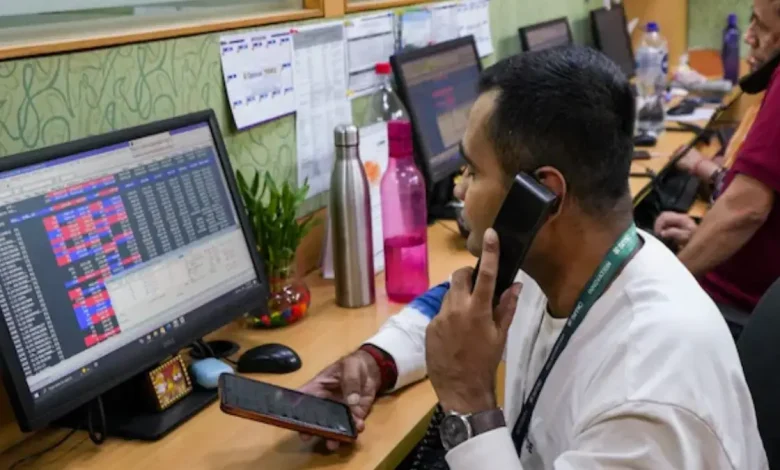
Mumbai : The cost of trading in futures and options was raised in the Union Budget 2026, a move that has drawn attention from traders and retail investors. I propose to raise the STT on Futures to 0.05 percent from present 0.02 percent. STT on options premium and exercise of options are both proposed to be raised to 0.15 percent from the present rate of 0.1 percent and 0.125 percent respectively,” said the Finance Minister.
Under the existing framework introduced through the Finance Act (No. 2), 2004, STT is charged on trades carried out on recognised stock exchanges. Until now, futures attracted an STT of 0.02 percent on the traded price, while options were taxed at 0.1 percent on the option premium and 0.125 percent on the intrinsic value when exercised.
Budget 2026 has revised these rates upward. STT on futures has been increased to 0.05 percent, while both option premium and option exercise now attract a uniform rate of 0.15 percent. These revised rates will apply to all derivatives transactions entered into on or after April 1, 2026.
The scale of futures and options trading in India has become extremely large when compared with the real economy.
In simple terms, while India’s GDP stands at around Rs 300 lakh crore, the volume of derivatives trading has crossed Rs 1.5 lakh lakh crore. The department said this gap shows that a large part of F&O trading is driven by short-term bets rather than genuine hedging or investment needs. The government believes that higher transaction costs can discourage purely speculative trades without affecting investors who trade occasionally or hold positions for risk management.


This suggests that the policy focus is narrow. The government is not trying to make equity investing expensive but is instead trying to slow down high-frequency and short-term derivatives trading, where retail participation has surged in recent years. Tax experts say the STT hike is less about raising revenue and more about influencing behaviour. Archit Gupta, Founder and CEO of ClearTax, said the increase sends a clear message.
He added that retail participation in markets has not fallen but changed in nature. With over 21 crore demat accounts and record SIP inflows of more than Rs 31,000 crore in 2025, investors appear to be moving away from frequent trading towards long-term investing. According to Gupta, the policy choice shows the government’s preference for steady capital formation over chasing short-term transaction taxes.
Read Also : Nirmala Sitharaman Cites Elon Musk’s Post, Slams Opposition On GDP