
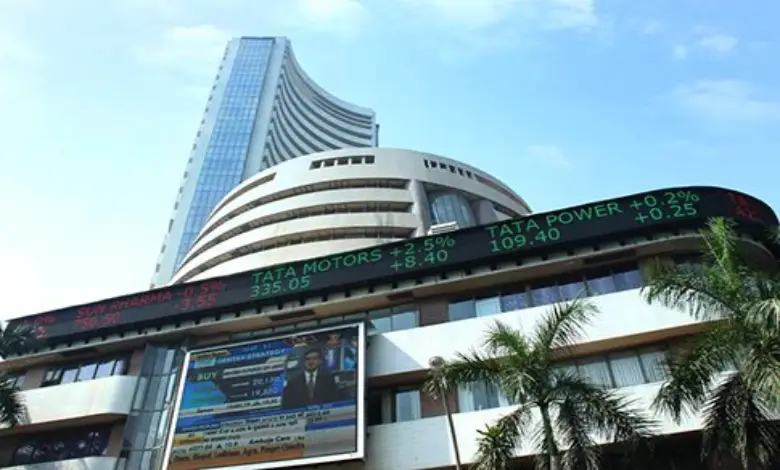
Mumbai: Finance Minister Nirmala Sitharaman will present the Union Budget 2026 on Sunday, February 1. With Sunday typically being a non-trading day, several investors had raised concerns about whether the stock exchanges would function.
Addressing these concerns, the National Stock Exchange (NSE) and Bombay Stock Exchange (BSE) have announced that both exchanges will remain operational on Sunday. This arrangement enables market participants to respond instantly to significant budget declarations and policy shifts.
TRADING PERMITTED, SETTLEMENT DEFERRED
While trading activity will proceed as usual, Sunday has been designated as a settlement holiday. Investors will be able to execute buy and sell orders, but the actual settlement of these transactions will occur on the following working day Monday, February 2, 2026.
The market regulator has further clarified that securities purchased on Friday, January 30, will not be available for sale on Sunday. This restriction stems from settlement cycle regulations that mandate adequate time for the completion of prior transactions.




TRADING HOURS ON BUDGET DAY
The stock exchanges will observe standard trading hours on Budget day. Equity trading will commence at 9:30 am and conclude at 3:30 pm. All principal market segments, including equity and derivatives, will function as they would on any regular trading session.
| Session | Start Time | End Time |
| Pre-Open* | 09:00 hrs | 09:08 hrs |
| Normal Market | 09:15 hrs | 15:30 hrs |
This extraordinary Sunday trading session has been arranged to allow investors, traders and institutional participants to act swiftly on announcements made in the Union Budget.
| Particulars | Start Time | End Time |
| Special Session | 08:45 a.m. | 08:59 a.m. |
| Trading Session | 09:00 a.m. | 05:00 p.m. |
| Client Code Modification | 09:00 a.m. | 05:15 p.m. |
BUDGET’S INFLUENCE ON STOCK MARKETS
The Union Budget carries substantial weight in market movements as it outlines the government’s expenditure plans and revenue generation strategies for the upcoming financial year. Critical announcements regarding taxation, subsidies and sector-focused policies are also included.
Stock markets typically experience heightened volatility on Budget day. Equity valuations frequently witness sharp fluctuations as market participants digest modifications in tax frameworks, government allocation priorities and policy overhauls.
The Finance Minister may reveal adjustments to GST, customs duty, excise and additional tax categories. Such modifications have direct consequences for sectors including manufacturing, electronics, oil and gas, FMCG and infrastructure.
Also Read: Economic Survey Explained: A Quick Guide To India’s Economic Health Ahead Of Budget 2026
Should tax reductions or fresh incentives be unveiled, corporate profitability could strengthen, potentially driving stock valuations upward. Conversely, increased taxation or stricter regulatory measures may diminish earnings prospects and depress stock prices.
RECOMMENDED APPROACH FOR INVESTORS
Given the inherent unpredictability of Budget day trading, market experts recommend that investors exercise prudence. Long-term investors are advised to concentrate on fundamentally sound stocks and refrain from making hasty decisions driven by temporary market fluctuations. Active traders should anticipate elevated volatility levels and implement appropriate risk management strategies.