
Gold Crosses Historic $5,000 Milestone, Silver Hits Record Highs: Is ‘Irrational Exuberance’ Driving the Rally?
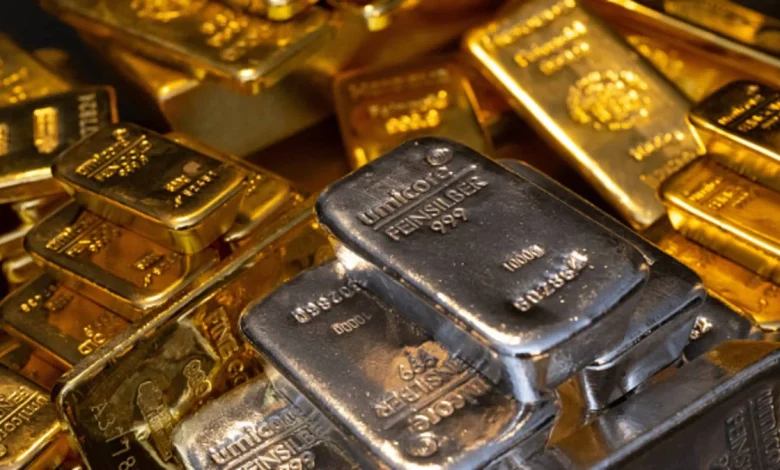
Gold prices surged past the historic $5,000 per ounce mark for the first time on record, accompanied by a record-breaking rally in silver. As both precious metals scale unprecedented heights, market observers are debating whether the surge represents strong fundamentals or a case of “irrational exuberance.”
While gold and silver have long been viewed primarily as stores of value rather than for their real-world utility, the current rally is being driven by a complex mix of geopolitical instability, central bank accumulation, and industrial demand for silver in emerging technologies such as electric vehicles.
However, the sustainability of this upward trajectory remains a key question for investors.
Record-Breaking Numbers: A Year of Explosive Growth
On Monday (Jan 26), gold spot prices officially breached the $5,000 threshold, trading around $5,074.48 per ounce after touching an all-time high of $5,091.14. The yellow metal is currently riding a wave of strong momentum, registering an 85 per cent increase year-on-year and a 17 per cent rise in the past month alone.




Also Read: Budget 2026 : What To Expect On Taxes, Growth And Key Sectors
Simultaneously, silver is demonstrating even more explosive growth. On Monday, the metal reached $108.17 per ounce, following its breach of the $100 mark for the first time on January 23. In percentage terms, silver has outperformed gold, surging over 258 per cent over the last year and rising 50 per cent in the past month.
Primary Drivers: Geopolitics and Policy Shifts
The rally is largely attributed to widespread risk aversion, prompting substantial safe-haven flows into precious metals. Global markets are reacting to a news cycle dominated by Donald Trump, where heightened geopolitical and policy uncertainties are driving investors toward safer assets.
Key geopolitical factors include:
- Tariff Threats: Tensions involving the Trump administration have escalated, creating trade frictions between the US and major economies, including China, India, and the European Union.
- Global Conflicts: Ongoing instability, such as the Ukraine–Russia war and regime-change risks in oil-active nations like Venezuela, Russia, and Iran, has underscored broader global volatility.
Domestically in the US, expectations of an accommodative Federal Reserve monetary policy specifically potential rate cuts—have weakened the dollar’s appeal, further boosting metal prices. Additionally, central banks worldwide are increasing their gold reserves.
Demand is also robust in Asia, particularly in India, evidenced by increased inflows into exchange-traded funds (ETFs) and heightened activity from both retail and institutional investors.
On the supply side, geopolitical tensions are compounding constraints. Silver, in particular, faces an acute shortage due to mining deficits while simultaneously seeing newfound utility in sunrise sectors like artificial intelligence, electronics, solar energy, and electric vehicles.
Market Sentiment: Fundamentals vs. ‘Herd Momentum’
The critical question facing the market is whether these valuations are sustainable. Investors are heavily hedging against fiscal risks, driven by concerns regarding rising inflation and diminishing confidence in traditional fiat systems like the US dollar.
Goldman Sachs has issued a bullish forecast, predicting gold could hit $5,400 per ounce in 2026, citing sustained demand from central banks and investors. Similarly, analysts at JP Morgan and Goldman Sachs argue that strong fundamentals specifically asset diversification and dwindling supply, particularly for silver support current price levels.
Also Read: Gold Nears 1.5 Lakh Mark And Silver Sets Record High Amid US-Europe Trade War
However, skepticism remains regarding potential “irrational exuberance,” especially concerning gold. Unlike silver, which has significant industrial applications, gold functions primarily as a non-yielding store of value with limited utility beyond jewelry, dentistry, and minor electronic applications.
Current market behavior exhibits characteristics similar to speculative bubbles seen in the past. High ETF premiums suggest that “fear of missing out” (FOMO) is driving some investors to follow the crowd, creating a “herd momentum” effect.
Analysts warn that if global conflicts and war risks were to ease suddenly, a sharp price correction could occur before the end of 2026.