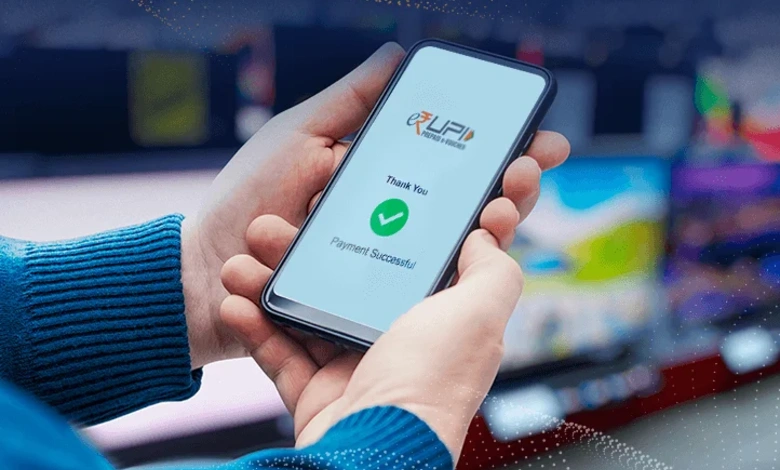
The Centre has rejected claims that the introduction of Merchant Discount Rate (MDR) on select UPI transactions was influenced by foreign interests, asserting that India’s digital payments policies are formulated independently.
The Finance Ministry said the move is aimed at building a sustainable and inclusive digital payments ecosystem while keeping UPI affordable for consumers.
“Some claims suggest the change is due to foreign influence. This is false. India’s UPI policy decisions are made independently, with the clear goal of building a self-sustaining, inclusive, and affordable digital payments ecosystem,” the ministry said.
Starting October 15, UPI merchant transactions above ₹2,000 will attract an MDR of 0.4%. The charge will be borne by merchants and will not apply to consumers.
For instance, a merchant receiving a UPI payment of ₹10,000 will pay ₹40 as MDR. The fee has been capped at ₹300 per transaction.
The government clarified that person-to-person (P2P) transfers will remain free of charge. It has also directed banks to ensure that merchants do not pass on the MDR cost to customers.
“Sending money to friends, paying at shops, or scanning a QR code — all remain without charges,” the Finance Ministry said.
Opposition Raises Concerns Over UPI Charges
The Congress has criticised the move, alleging that it could benefit international card companies and raise costs for consumers.
Rajya Sabha MP Jairam Ramesh questioned the rationale behind the 0.4% MDR rate and alleged that the decision could help foreign payment networks compete with UPI.
“Why 0.4% MDR? Is it because debit card MDR is also 0.4%? Is this being done to enable US card companies to compete with UPI?” Ramesh said.
Also Read:NPCI Announces MDR for UPI; Merchant Transactions Above Rs 2,000 to Attract 0.4% Charge
The Congress has also argued that merchants may eventually pass on the additional cost to customers through higher prices.
The government, however, has maintained that the MDR framework is designed to strengthen UPI’s long-term sustainability without affecting everyday users.
-

-

-
-