
BRICS Summit 2026: What RBI’s Push for Easier Trade Payments Really Means for Dedollarisation
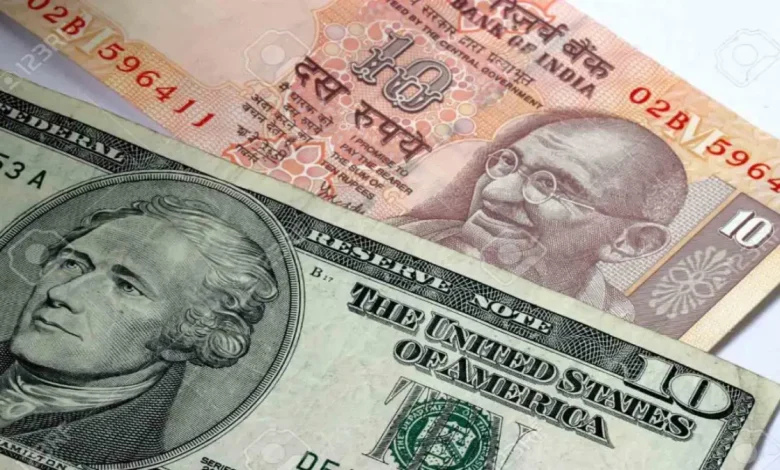
BRICS is aiming to make cross-border payments faster, cheaper and less dependent on traditional financial channels. Recent comments and recommendations from the Reserve Bank of India (RBI) point towards a potentially significant shift in how trade and other cross-border payments could be settled among BRICS economies. This is not being described as dedollarisation per se, but it does carry elements of countries being able to settle trade in their local currencies.
What did RBI Governor Sanjay Malhotra say on BRICS payments?
RBI Governor Sanjay Malhotra recently said BRICS members were discussing possible links between their fast payment systems and central bank digital currencies, or CBDCs. “Cross-border payments is an area of interest for all of us, including the BRICS, because we feel there is a lot of scope for reducing cost,” Malhotra said in Mumbai.
He noted that various options were on the table, while highlighting the speed of India’s Unified Payments Interface (UPI) compared with international remittances that can take hours or days to settle.
BRICS is considering more than one mechanism
Linking existing fast-payment systems is one approach, while interoperability between national CBDCs is another. However, a single BRICS-wide payment network has yet to take shape.


The Indian central bank had recommended that the linking of BRICS members’ CBDCs be included on the agenda of the 2026 BRICS Summit, with the aim of streamlining cross-border trade, trade finance and tourism payments through compatible technology and governance arrangements.
India has been pushing the CBDC-linking proposal ahead of the BRICS Summit, though technical and political hurdles remain, including questions over governance, technology compatibility and trade imbalances between member countries. Currency-swap arrangements and regular settlement mechanisms could be required in cases involving large bilateral trade imbalances.
Also Read:Bank Strike Today : Reasons Behind Protest and What Happens Next
Finance ministers and central bank governors have been discussing the BRICS Cross-Border Payments Initiative for some time, while the BRICS Payment Task Force is exploring greater interoperability between member states’ payment systems. The broader idea is to facilitate cross-border payments that are fast, low-cost, accessible, efficient, transparent and safe, while supporting trade and investment flows.
Settling trade in local currencies: The other part of the equation
The RBI is also working to expand the international use of the rupee and other national currencies. Malhotra said the RBI would continue its efforts to internationalise the rupee and promote the use of local currencies for cross-border payments and trade. India already has bilateral local-currency settlement arrangements with the UAE, Indonesia, Maldives and Mauritius.
The RBI’s framework for international trade settlement through the rupee, including Special Rupee Vostro Accounts (SRVAs), functions alongside the existing system that uses freely convertible currencies. The RBI’s Inter-Departmental Group on Internationalisation of the Indian Rupee (INR) had recommended expanding the use of local currencies, particularly with major trading partners.
Reducing dollar dependence without removing it entirely
These measures could reduce the need for, and dependence on, the US dollar in some bilateral transactions, even though “dedollarisation” is not the stated objective. If two BRICS nations can use interoperable payment systems to settle directly in their respective currencies, the transaction may not need to be routed through the dollar.
For CBDCs, if digital currencies issued by participating central banks can eventually interact directly under agreed technical and regulatory standards, cross-border payments could become faster and potentially cheaper. It amounts to a form of smart diversification, one that could eventually reduce the need for a third currency such as the dollar in such transactions.
Is this BRICS dedollarisation?
The RBI and the Indian government have not presented these initiatives as dedollarisation or as a move towards establishing a BRICS currency. The RBI’s CBDC proposal is not aimed at promoting dedollarisation, and India’s stated objective is to make international transactions easier and faster, rather than to replace the US dollar as the world’s reserve currency.
India has been cautious about BRICS turning into an explicitly anti-dollar financial bloc. There is no agreed BRICS common currency as of now, nor has any plan been announced for a BRICS alternative to the existing international monetary system.
The big challenge of trade imbalances
The basic problem with any future payment mechanism lies in how to settle persistent trade imbalances. If a country accumulates large balances in another country’s currency but has limited opportunities to spend or invest them, local-currency settlement can become unsustainable. To manage such imbalances, potential BRICS arrangements could require currency swaps and regular settlement mechanisms.