
Sriharikota: India’s space ambitions are getting bigger, and ISRO says it will need help from private companies to keep up.
ISRO Chairman V Narayanan has made it clear that the growing role of private players in the space sector is not about sidelining ISRO. The simple reason, he said, is that ISRO alone cannot meet the country’s rapidly growing demand for satellites and space services.
India currently has around 56 satellites, but the requirement is expected to run into the hundreds. That gap, according to Narayanan, is one of the main reasons the country needs a much larger space ecosystem, with private companies playing a bigger role alongside ISRO.
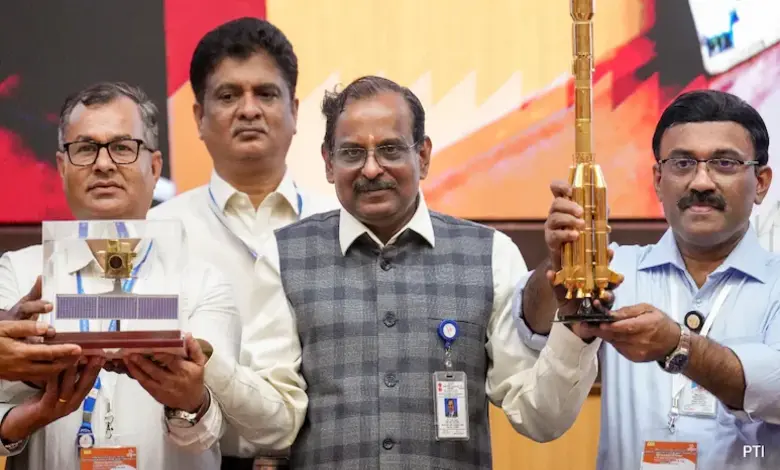
His comments came on a day when ISRO itself achieved an important milestone. The space agency successfully launched the EOS-05 Earth observation satellite aboard the GSLV-F17 rocket from the Satish Dhawan Space Centre in Sriharikota at 2:55 am on September 4.



EOS-05 is particularly significant because it is India’s first imaging satellite designed to operate from a geosynchronous orbit. From roughly 36,000 km above Earth, it is expected to provide continuous observation and strengthen India’s Earth observation capabilities.
For ISRO, the successful mission also adds to the importance of the GSLV programme. The latest flight was the 19th GSLV mission, following the successful NISAR launch in 2025.
But Narayanan’s larger message goes beyond one launch.
Under India’s space sector reforms, private companies are being encouraged to build satellites, develop launch vehicles, provide space based services and become part of the country’s growing commercial space industry. ISRO, meanwhile, can focus more on complex technology, scientific missions and national programmes while supporting the wider industry.
Narayanan said this expansion could bring more satellite manufacturing, create jobs and generate economic growth.
The timing is important. India is also pushing ahead with major programmes such as Gaganyaan, its human spaceflight mission, while work continues on the new spaceport at Kulasekarapattinam in Tamil Nadu.
The message from ISRO is straightforward India’s space ambitions are no longer small enough for one organisation to carry alone. The next big leap may depend not just on how far ISRO can go, but on how quickly India can build an entire industry around it.
ALSO READ: ISRO’s ‘Naughty Boy’ Flies Again: GSLV-F17 Successfully Launches EOS-05