
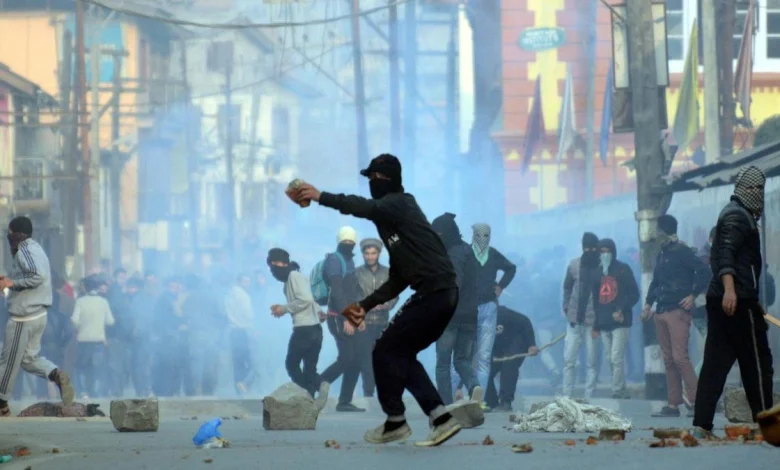
A young protester in Srinagar’s old city during the 2016 unrest was struck by a pellet gun, losing vision in one eye. He later described the sensation as hot iron burning inside the eye. A decade on, he continues to experience vivid flashbacks and remains under psychiatric care, representing one of thousands affected by such injuries in the region.
Around 6,000 people were impacted by pellet guns during the 2016 protests. A 2018 study by the Government Medical College in Srinagar examined 380 victims and documented significant psychological consequences, particularly among those with eye injuries. Among this group, 30.38 percent reported depression, 16.92 percent adjustment disorder, 13.08 percent panic disorder, and 10.77 percent post-traumatic stress disorder.
Of the 380 cases reviewed, 219 (57.63 percent) involved simple injuries, while 161 (42.37 percent) were classified as grievous. Grievous injuries included loss of eyes, ears, or joints, fractures, disfigurement, or emasculation. Among those with grievous injuries, depression was the most common condition, followed by PTSD, adjustment disorder, and panic disorder.
Eye injuries accounted for the majority of cases (260), with another 100 involving limbs. Among limb-injury patients, 29 percent showed no psychiatric illness. The remainder were diagnosed with conditions such as mixed anxiety and depression, specific phobias, hypomania, PTSD, substance abuse, generalized anxiety disorder, panic disorder, adjustment disorder, or depression, each ranging from about 2 to 16 percent.




The study group consisted of 333 males and 47 females. Most victims were young: 40.79 percent were aged 10–20 and 40.53 percent were aged 21–30. Psychiatric morbidity was more prevalent among those from rural areas (56.97 percent) than urban areas (43.03 percent). Three-quarters of those with mental health conditions belonged to nuclear families.
Pellet shotgun cartridges, each containing up to 500 pellets, were first introduced in Jammu and Kashmir in August 2010 following earlier street protests that resulted in around 100 civilian deaths. A separate 2022 analysis of 2010 cases found that 30 percent of victims suffered eye injuries and 50 percent experienced open-globe injuries. Due to their high speed and small size, pellets frequently caused penetrating or perforating eye injuries or left foreign bodies inside the eye or orbit. Imaging showed intraorbital foreign bodies in 62.7 percent of scanned patients and intraocular foreign bodies in 27.2 percent, with vitreous hemorrhage detected in 33.8 percent.
These findings underscore the long-term physical and psychological toll of pellet injuries on affected individuals.