
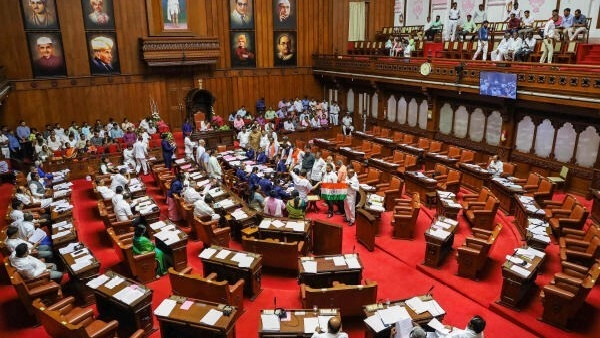
New Delhi: The Rajya Sabha on Wednesday passed the Prevention of Insults to National Honour (Amendment) Bill, 2026, extending criminal liability to deliberate insults against the National Song, Vande Mataram. The move brings the song under the same legal protection currently granted to the National Anthem, Jana Gana Mana.
The amendment updates the existing Prevention of Insults to National Honour Act, 1971, which already penalises intentional disrespect to the National Flag, the Constitution and the National Anthem. Violations under the Act carry a prison term of up to three years, a fine, or both, with repeat offenders facing a mandatory minimum sentence of one year.
Under the newly passed provision, anyone who deliberately insults Vande Mataram, or intentionally disrupts an assembly while it is being sung, will now face criminal prosecution for the first time.
The legislation arrives during the 150th anniversary year of Vande Mataram, composed by Bankim Chandra Chattopadhyay and later woven into his novel Anandamath.




Also Read:“Work Fearlessly, I’ll Take Responsibility”: CRPF Chief GP Singh
It also follows a Union Home Ministry directive issued in January this year, instructing that all six stanzas of Vande Mataram be sung first whenever it is performed alongside the National Anthem at official government functions.
Piloting the Bill in the Rajya Sabha, Minister of State for Home Affairs Nityanand Rai framed the legislation as central to preserving India’s national consciousness and cultural heritage. He also took aim at the Opposition, accusing the Congress party of undermining the country’s honour through what he called “appeasement politics” in opposing statutory protection for the song.
Rai traced the song’s contested history through the decades — from Jawaharlal Nehru’s 1937 decision to restrict official use to only two stanzas, to Subhas Chandra Bose’s restoration of the full six-stanza version in 1938. He further invoked Sardar Patel’s Independence Day broadcast order in 1947 and former President Rajendra Prasad’s 1950 declaration placing Vande Mataram on equal footing with the National Anthem.
The Bill’s passage came amid a turbulent Monsoon Session of Parliament, with Opposition MPs raising slogans and disrupting proceedings over police action against student protesters demanding accountability from the government over the NEET UG 2026 paper leak controversy. The House took up the Bill after reconvening following two adjournments earlier in the day, with debate continuing despite the protests.