
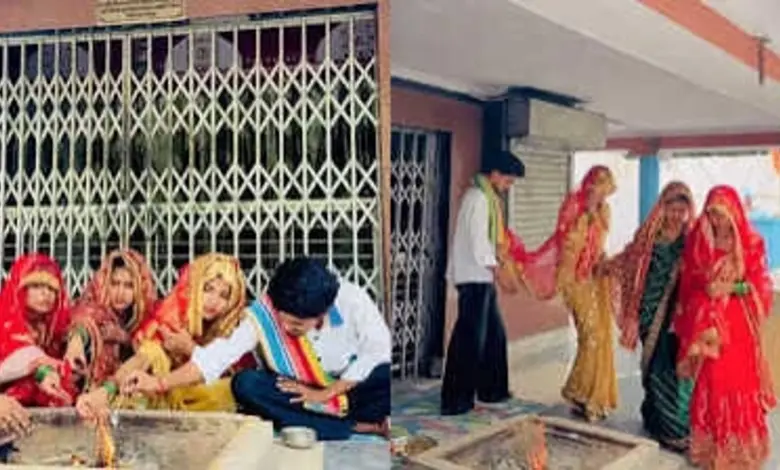
Amroha: A wedding unlike any other has put a village in Uttar Pradesh’s Amroha district in the national spotlight after three young women married the same man, claiming they made the decision because they had spent their entire lives together and could not imagine being separated.
Videos of the ceremony have spread rapidly across social media, sparking everything from disbelief and admiration to legal questions and heated online debates.
The women Saroj (20), Savitri (19) and Santosh (18) are content creators from Dhauriya village in Hasanpur. While early viral posts described them as three sisters, reports indicate that Saroj and Savitri are sisters, whereas Santosh is their cousin. The groom, 20 year old Vikas Khadakvanshi, had reportedly been working as their cameraman for several months and frequently featured alongside them in their videos.
According to the four, the idea of marriage took shape when their families began discussing separate alliances for the women. They said they had grown up under the same roof, shared every milestone of their lives and did not want marriage to force them into different households.


Speaking in videos that surfaced online after the wedding, the group insisted the decision was entirely their own. They said all four are adults and entered the marriage willingly, asking people to respect their choice rather than judge it.
The ceremony is believed to have taken place at the Chamunda Mata Temple in Amroha, where Vikas was seen performing traditional Hindu wedding rituals with each of the women. However, temple authorities later distanced themselves from the event, saying no authorised priest conducted the ceremony and that renovation work was underway at the premises when the videos were recorded.
As the clips went viral, questions quickly shifted from the unusual nature of the wedding to whether it holds any legal standing.
Under the Hindu Marriage Act, 1955, a Hindu marriage is valid only if neither party has a living spouse at the time of the marriage. Legal experts say that because the law prohibits polygamy among Hindus, the ceremony is unlikely to be recognised as a legally valid marriage, regardless of the participants consent.
Police in Hasanpur said they spoke to the individuals after the videos attracted widespread attention. Officials said the four maintained that they were adults and had acted of their own free will. So far, no formal complaint has been lodged, and authorities have not registered a case. Police have indicated that any further action would depend on the findings of an inquiry or the receipt of a complaint.
The incident has triggered a wider conversation about the intersection of personal freedom, social norms and the law. While many online users have questioned the legality and authenticity of the wedding, others argue that the adults involved should have the freedom to make their own life choices.
Whether viewed as an expression of personal choice or a legal controversy, the Amroha wedding has become one of the country’s most talked about viral stories, highlighting how a private decision can quickly turn into a national conversation in the age of social media.
ALSO READ: Nagaland Man’s Rs 67,734 Pizza Order For Jantar Mantar Protesters Goes Viral, Wins Hearts Online