
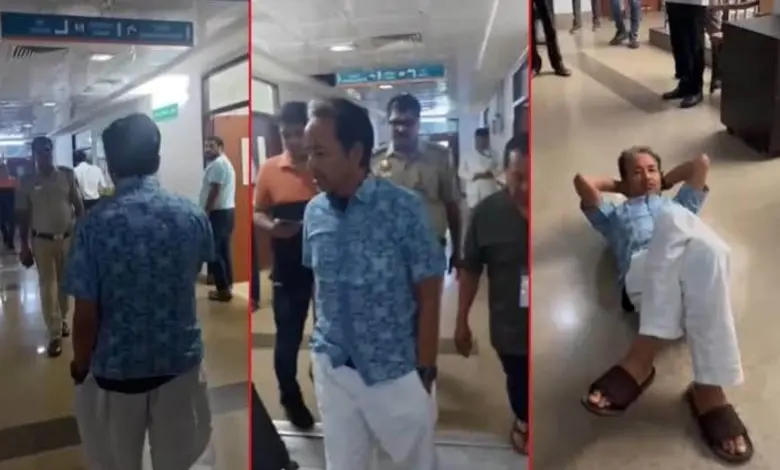
New Delhi: What began as a protest over alleged irregularities in public examinations has now opened up another debate this time over the rights of a patient under medical care. Climate activist Sonam Wangchuk’s exit from Safdarjung Hospital, accompanied by allegations that he was prevented from meeting visitors and moving freely, has shifted attention from Jantar Mantar to the circumstances surrounding his stay at the government run facility.
In a video shared after leaving the hospital, Wangchuk questioned why he was being treated as though he was under detention. “If you want to arrest me, arrest me. But I am leaving,” he said while walking out of the hospital premises. The activist claimed that visitors were repeatedly stopped from meeting him and that he was not allowed to leave despite insisting he was no longer willing to remain there.
His departure came shortly after the Delhi High Court allowed him to shift to a private hospital of his choice. Acting on the court’s order, Wangchuk was later admitted to Medanta Hospital in Gurugram.
Safdarjung Hospital, however, has denied any wrongdoing. Hospital authorities said all decisions regarding Wangchuk’s treatment and movement were taken keeping his medical condition in mind and that standard protocols were followed throughout his stay. Officials have maintained that the care provided to him was in line with medical requirements.

Wangchuk was admitted after Delhi Police removed him from his indefinite hunger strike at Jantar Mantar, where he had joined protesters demanding accountability over alleged examination related irregularities. His hospitalisation quickly became another flashpoint, with supporters gathering outside the facility and alleging that he was being kept away from fellow protesters.
The High Court’s intervention has now added a legal dimension to the controversy. While the immediate issue of Wangchuk’s transfer has been resolved, the episode has sparked wider discussions on where the line should be drawn between medical supervision, security arrangements and an individual’s personal liberty during politically sensitive protests.
Meanwhile, protests linked to the examination controversy continue in the national capital, with organisers saying their agitation will go on even as the focus briefly shifts to the events inside Safdarjung Hospital.
ALSO READ: BREAKING: Dharmendra Pradhan Resigns Amid Massive Student Protests Over NEET Leak Fiasco